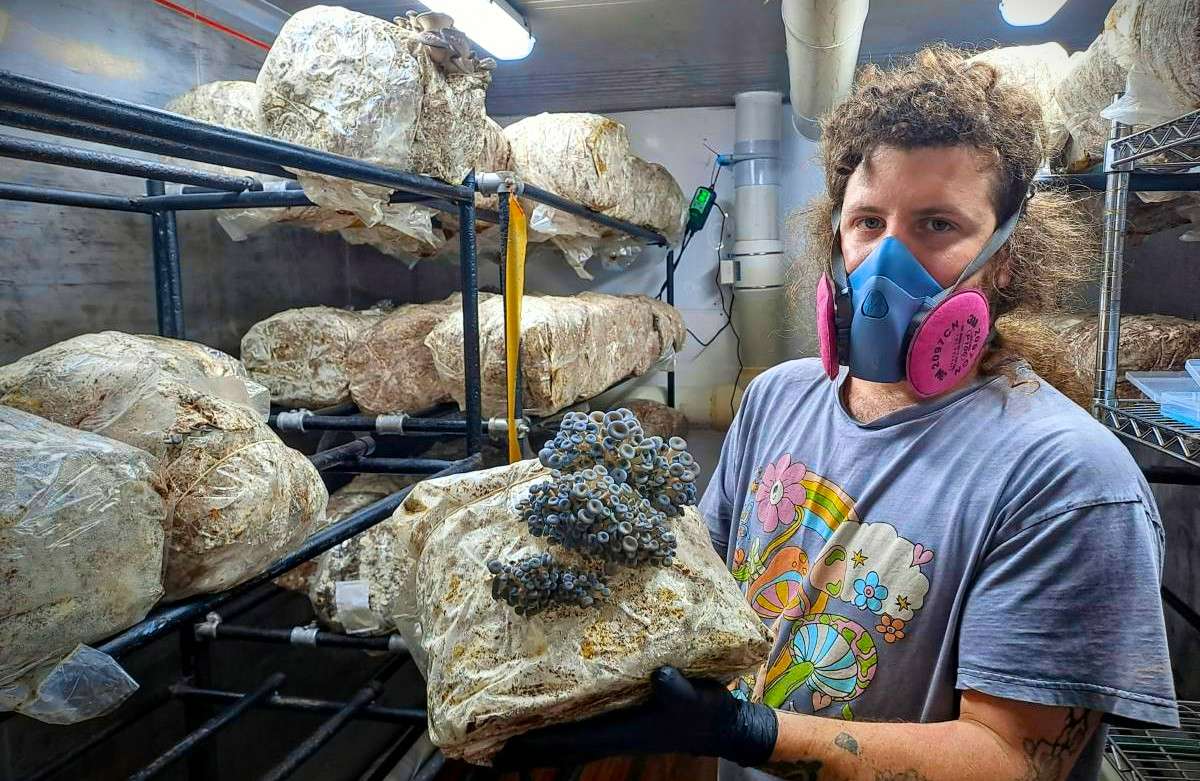
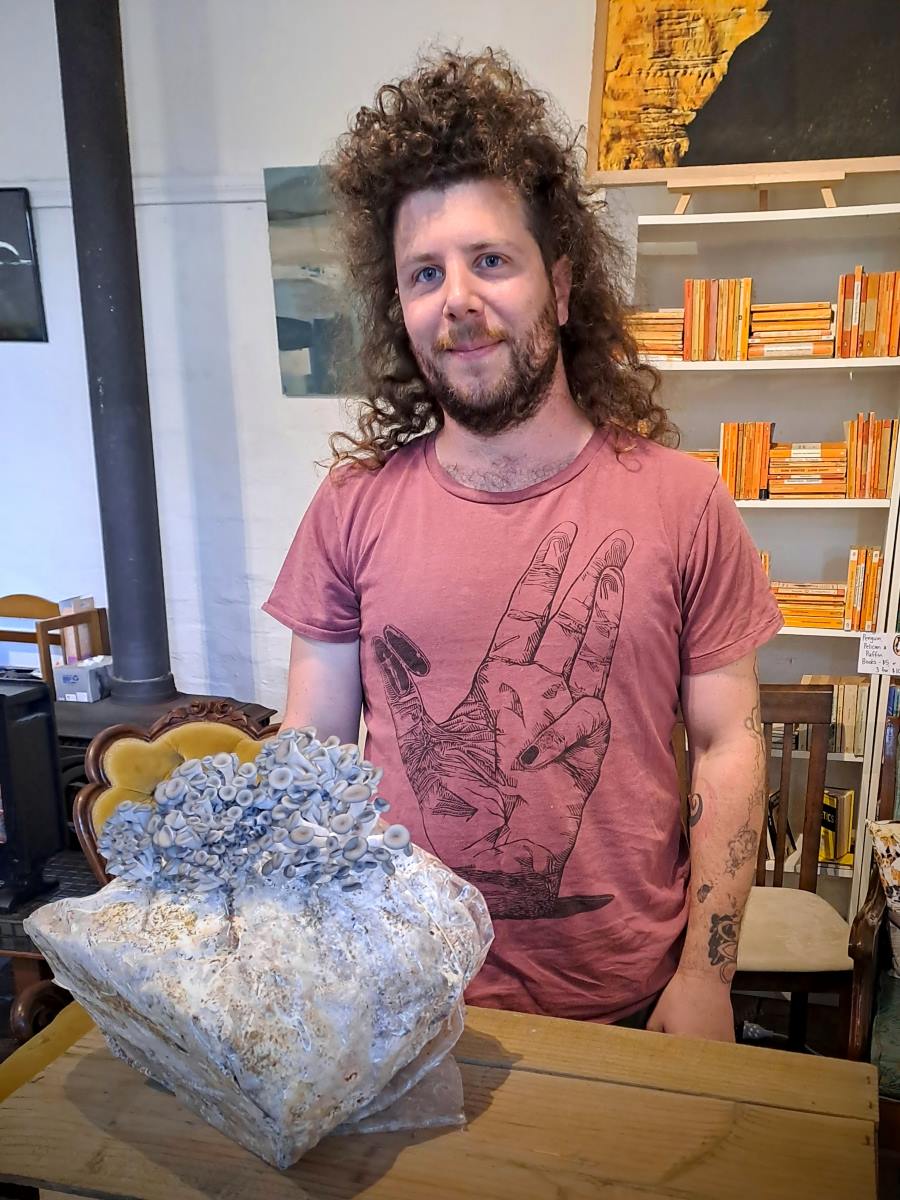
Alex Felix at EarthRising Mushroom Farm with his Blue Oyster mushrooms.
Story and photos by Belle Butler
Fungi fever? Mushroom madness? Mushrooms are a hot topic at the moment with more and more research illuminating the essential role these organisms play in the health of the planet as well as the significant health and medicinal benefits they hold for humans. Belle Butler visited local mushroom grower, Alex Felix, at his farm in Lawson to talk about the mighty mushroom.
Key Points:
Fungi are essential for life on the planet.
Fungi are a promising solution for multiple environmental problems.
Edible mushrooms have numerous health benefits and, high in protein, offer a sustainable option for meat substitution.
Back in the ’80s and ’90s when I was growing up, mushrooms on the dinner plate invited fierce protests from kids at large. There seemed to be only one edible variety – the good old button mushroom – and it was usually prepared in a way that made you feel like you were chewing up slimy eyeballs.
How far we have come! With the scientific and popular focus on fungi in recent years, one might say we are in the age of the mushroom. From culinary delicacy to medicine, environmental saviour to psychological healer, the uses and functions of this organism are extensive.
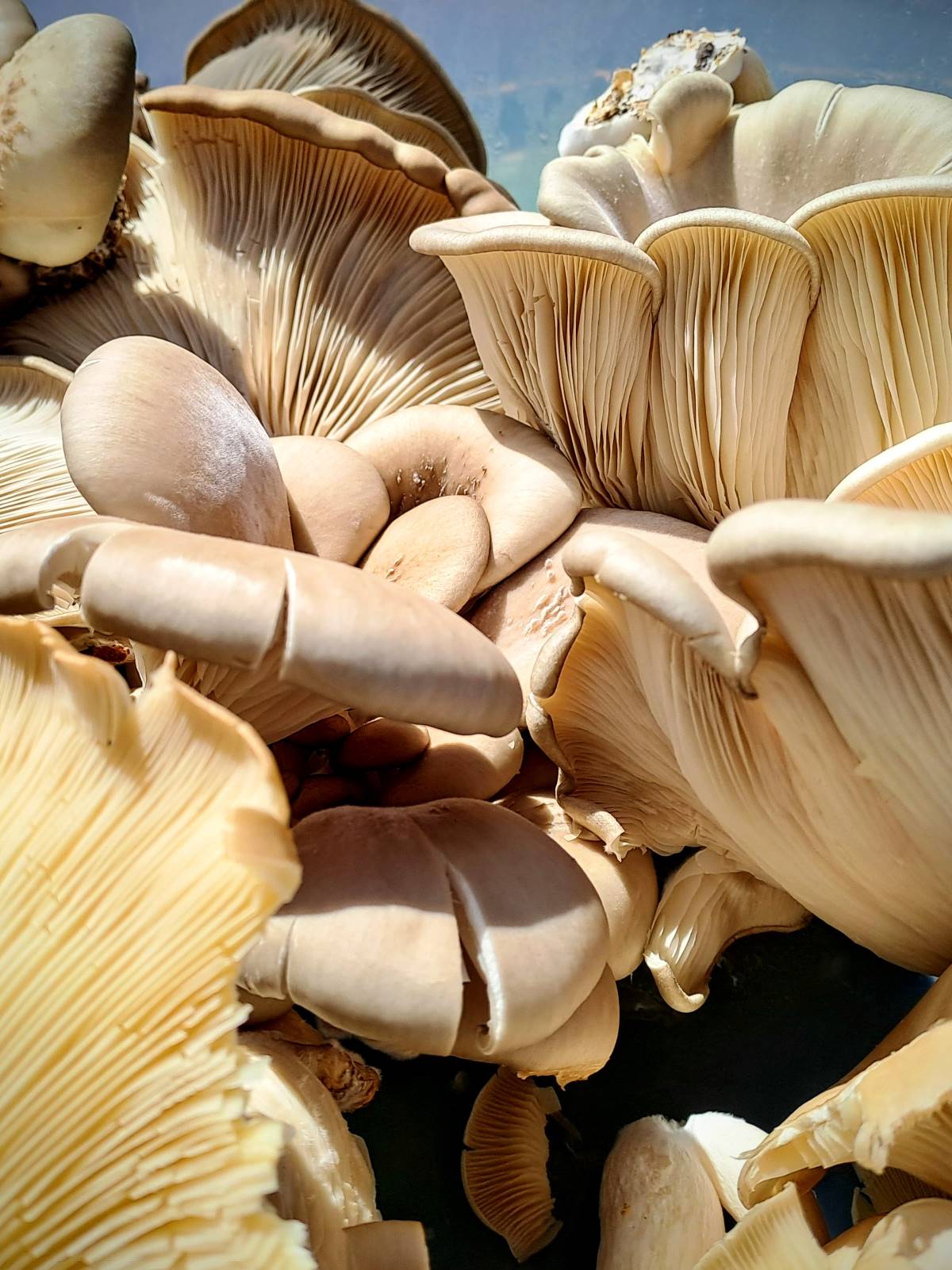
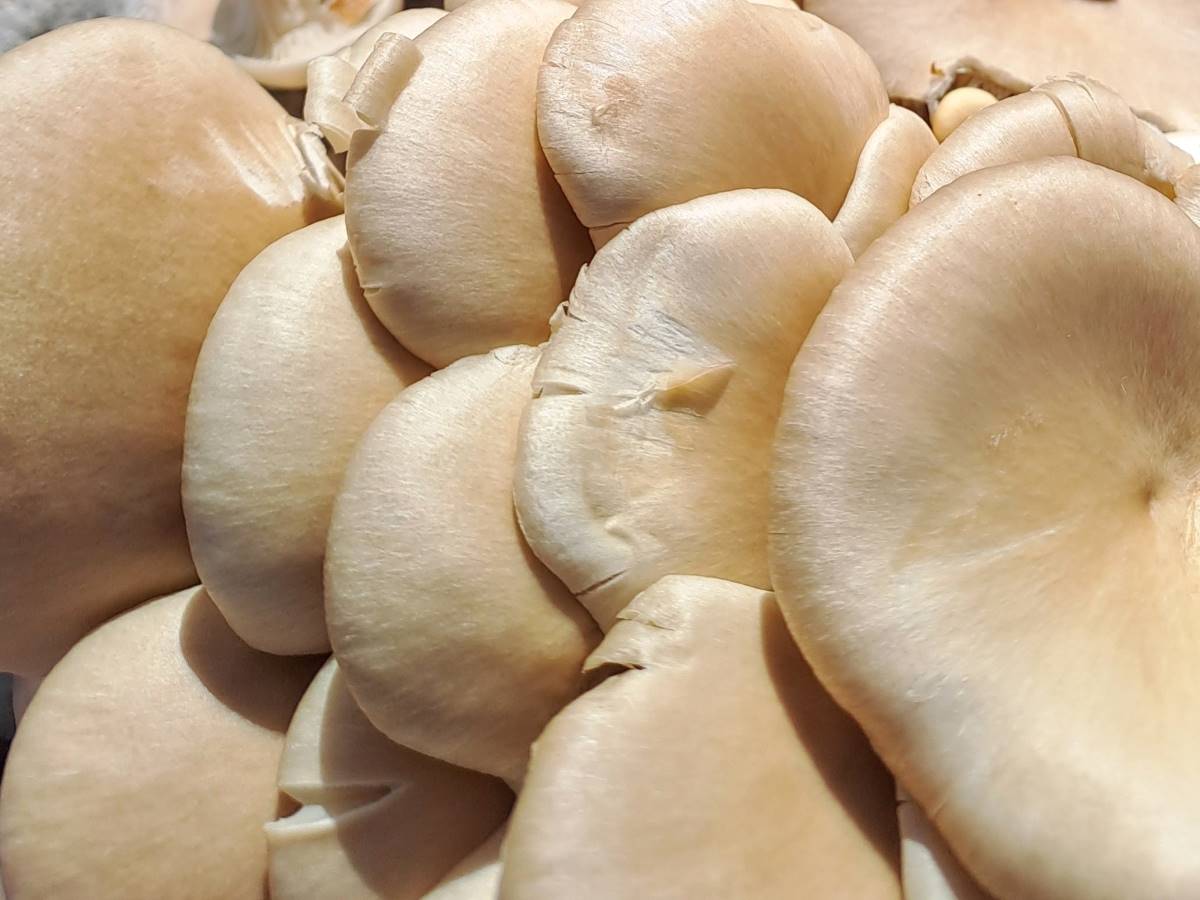
Oyster Mushrooms showing off their gills and frills at Earthrising Mushroom Farm.
Local fungi enthusiast and grower, Alex Felix of Earthrising Mushroom Farm in Lawson, is a keen advocate for the benefits of mushrooms for human health and the planet alike.
Originally from France and with a background in creative arts, Alex moved to Australia with his partner two years ago in an act of eschewing the stresses of life he experienced living in cities. “I was in need of nature and big spaces. Moving here was part of a big shift in my life. At the same time as my move to Australia I also became a father, and this coincided with a new passion and business I have never done before – giving life to mushrooms!”
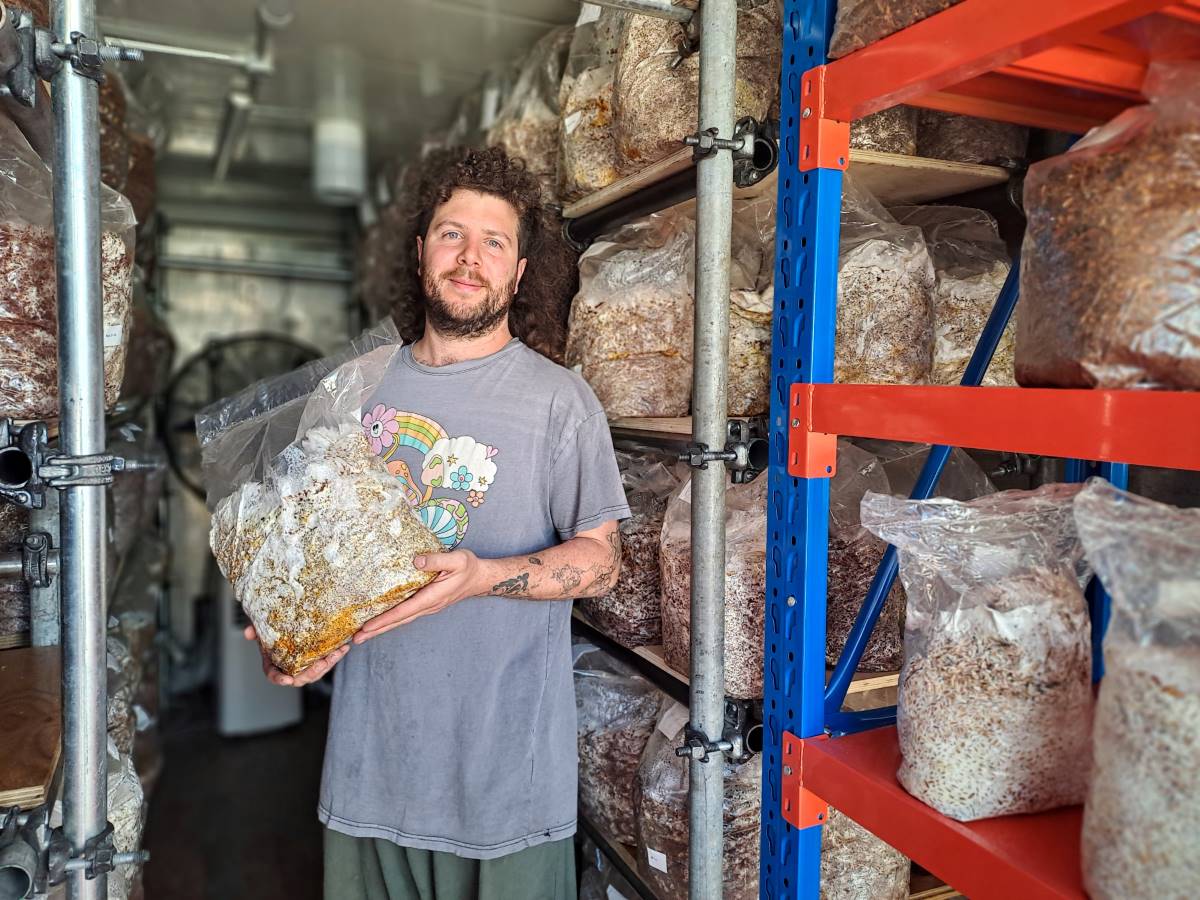
Alex holding an inoculated substrate at his Earthrising Mushroom Farm in Lawson.
Alex credits his interest in mushrooms to a broader curiosity about growing food after city life left him feeling disconnected from these processes. “One day I finally had my own garden to experiment with and this is where I started to learn. Naturally I came across permaculture practices and couldn’t stop until I had learned about how everything is intertwined and works together,” he said.
“I was fascinated about how easy it is to grow things when you know what you are doing, and then from permaculture to mushroom farming was just the next intuitive step in my journey. I just followed my instinct and went deep-diving into it, and here I am.”
A time lapse of oyster mushrooms growing in one of Alex’s mushroom grow kits
Alex created Earthrising Mushroom Farm with Sydney-based business partner and brother-in-law Naji. With sustainability at the forefront of his mind, Alex built the farm out of 80% second-hand or repurposed materials, and to reduce energy consumption, he works with the seasons, growing summer strains during the warmer months and winter strains during the cooler months.
As much as he can, he buys what he needs for the farm within a 100km radius, and the waste of his product – soil-loving mushroom compost comprised of sawdust and mushroom mycelium – can be purchased for $2 a bag (minimum 10 bags) from the farm.
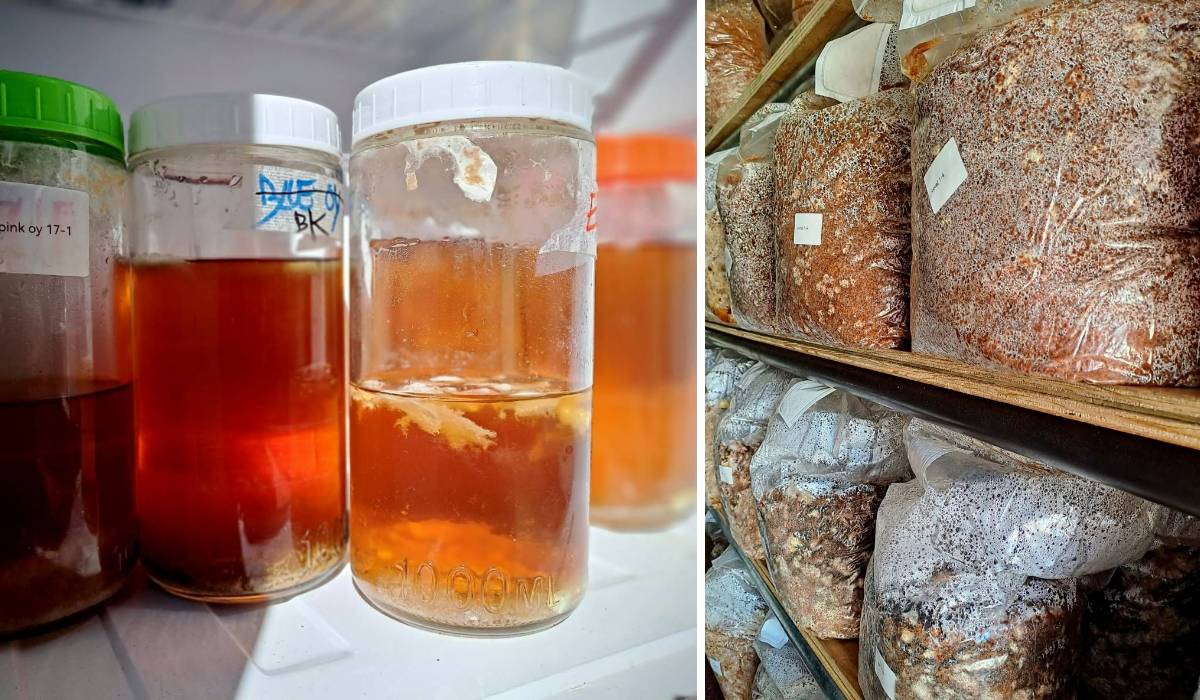
Left: Water culture used to inoculate the sterilised substrate. Right: Inoculated substrate where mycelium will begin to grow.
“Something I am very happy about is working on a circular economy model,” Alex said. “I recycle the waste of the local wood workshops by using their sawdust as a growing medium for the mushroom. And it transforms the sawdust into mushroom compost that goes back to earth. Gardeners and locals come to pick up the compost for their garden or veggie patch. This is gold for the soil, providing nutrients for plants, and improving soil structure, friability, and permeability. It boosts root growth and soil’s water-holding capacity, ensuring adequate moisture for plants.”
Supplying local restaurants and selling directly to the public, Alex feels a sense of gratitude for the opportunity of providing the local community with fresh nutrient-dense gourmet mushrooms, including the rare varieties of Lion’s Mane and the tropical Pink and Yellow Oyster mushrooms. He is also currently experimenting with creating his own supplements using dried Reishi mushrooms, which he hopes to sell in the near future.
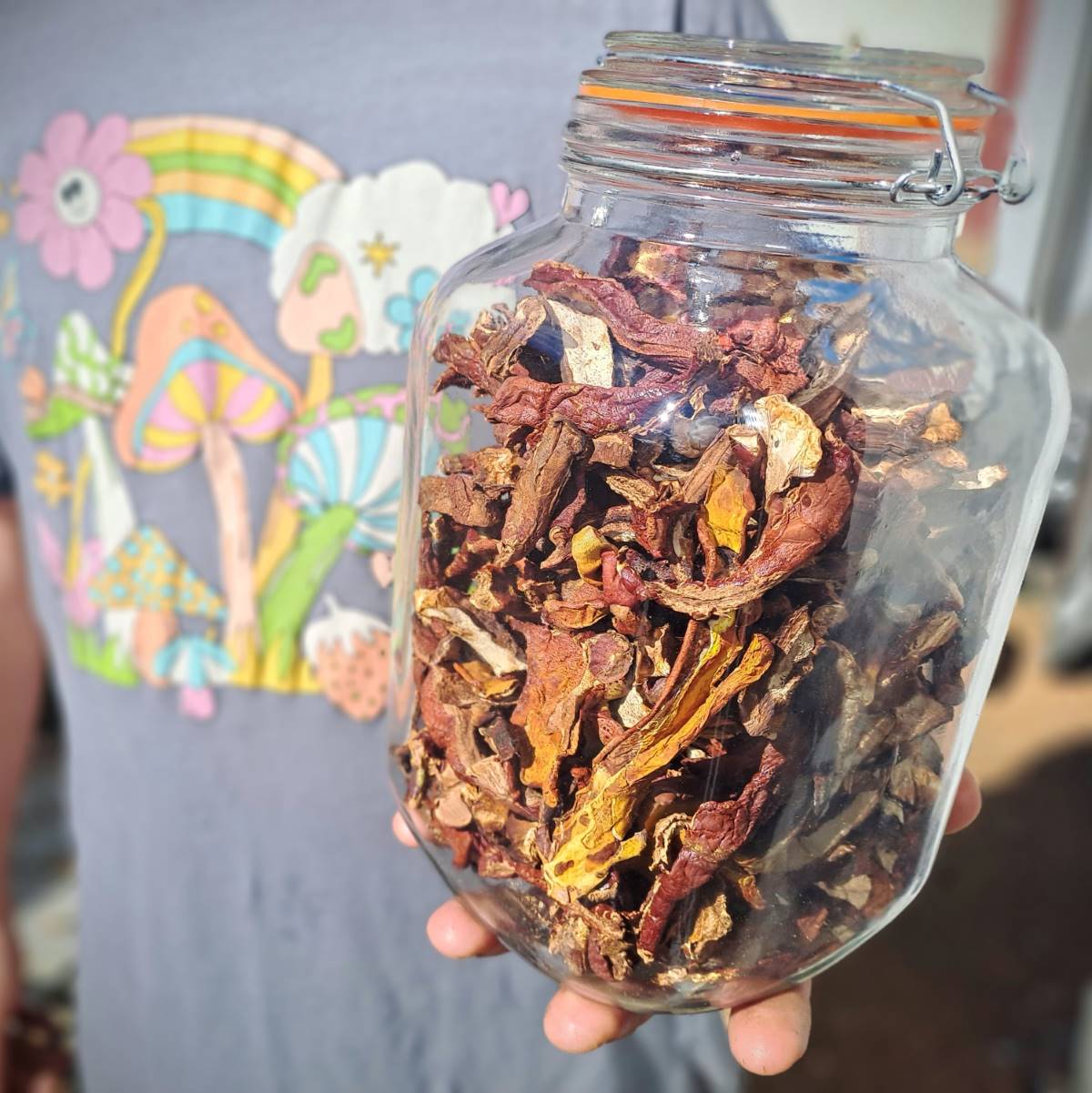
Dried Reishi mushrooms that Alex hopes to turn into a powdered supplement.
So What Makes Mushrooms So Amazing?
As Alex puts it: “The mushroom kingdom is like an octopus, with so many tentacles or branches to work with: fresh produce, architecture, object design in mycelium, environment (myco-remediation), medicinal product.”
Pearlescent tops of Oyster mushrooms from Earthrising Mushroom Farm.
In the wild, fungi are essential to life on the planet. More than 90 percent of plants rely on symbiotic fungi for nutrients and defence against disease. Fungi are the primary degraders of organic matter, turning dead matter into nutrients for other organisms, and the mycelium of fungi (similar to root systems) binds soils together, and carries water, nutrients and chemical signals through its vast networks.
“Numerous healthy plant compounds can be found in Lion’s Mane mushrooms,” said Alex. “According to research, these substances may support the gut, heart, and stimulate the immune system, help the growth of new brain cells, as well as alleviate depression and anxiety. Lion’s Mane is also recommended for people with ADHD, as it can act as a brain enhancer by improving focus and short-term memory. That’s the main reason why people take lion’s mane powder as a food supplement.”
As a medicinal product, psilocybin (commonly called magic mushrooms) is also undergoing significant research for its use in psychological healing. “I am particularly impressed by the Australian government that reclassified last year the therapeutic use of the psilocybin used in psychedelic-assisted therapy to treat mental health conditions like PTSD and depression,” Alex said.
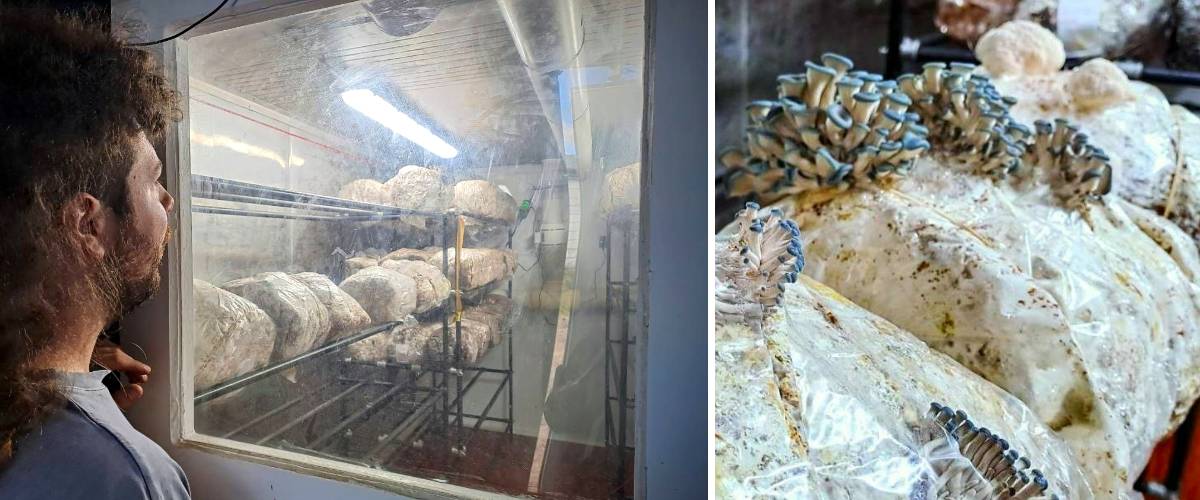
Left: Alex created a viewing door for visitors to observe the growing process without contaminating the space or breathing in spores. Right: Young Blue Oyster mushrooms on the rise with Lion’s Mane in the background.
Mushrooms’ restorative properties don’t stop at human health. Researchers are finding more and more ways that mushrooms can help restore the health of the planet. From cleaning contaminated soil and degrading plastics to filtering contaminated water, mycelium can be used to break down and absorb pollutants and restore ecosystems. Mycelium is also being used for innovative creations such as sustainable building materials, sustainable ‘leather’, faux-meat products, and compostable packaging.
“Mushrooms are here to help us,” said Alex. “We are just at the beginning of understanding it. The only challenge is to find solutions on how to scale up these discoveries. If one day we can decompose a full landfill of plastic with mushrooms that would be amazing.”
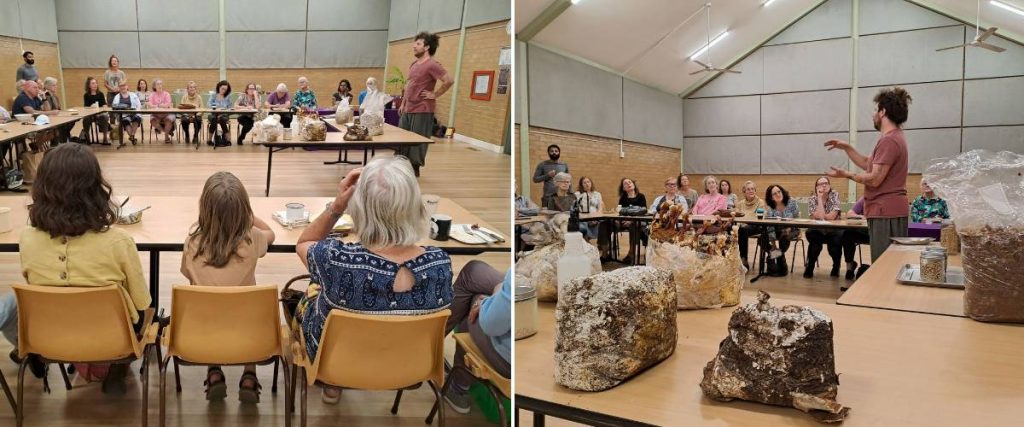
Alex talked to an engaged audience at a Permaculture Blue Mountains event about the process of growing mushrooms.
Also interested in mycelium-based products, Alex believes that that this material can revolutionise many industries. “Mycelium-based materials are biodegradable, consume little energy and have a low carbon footprint. They’re also relatively cheap and offer good fire, thermal and acoustic insulation. It can be a good alternative to plastic for the packaging industry to replace polystyrene, for example, which is terrible for the environment. Also in the building industry, insulation panels can be made to insulate a house, and it’s fireproof.”
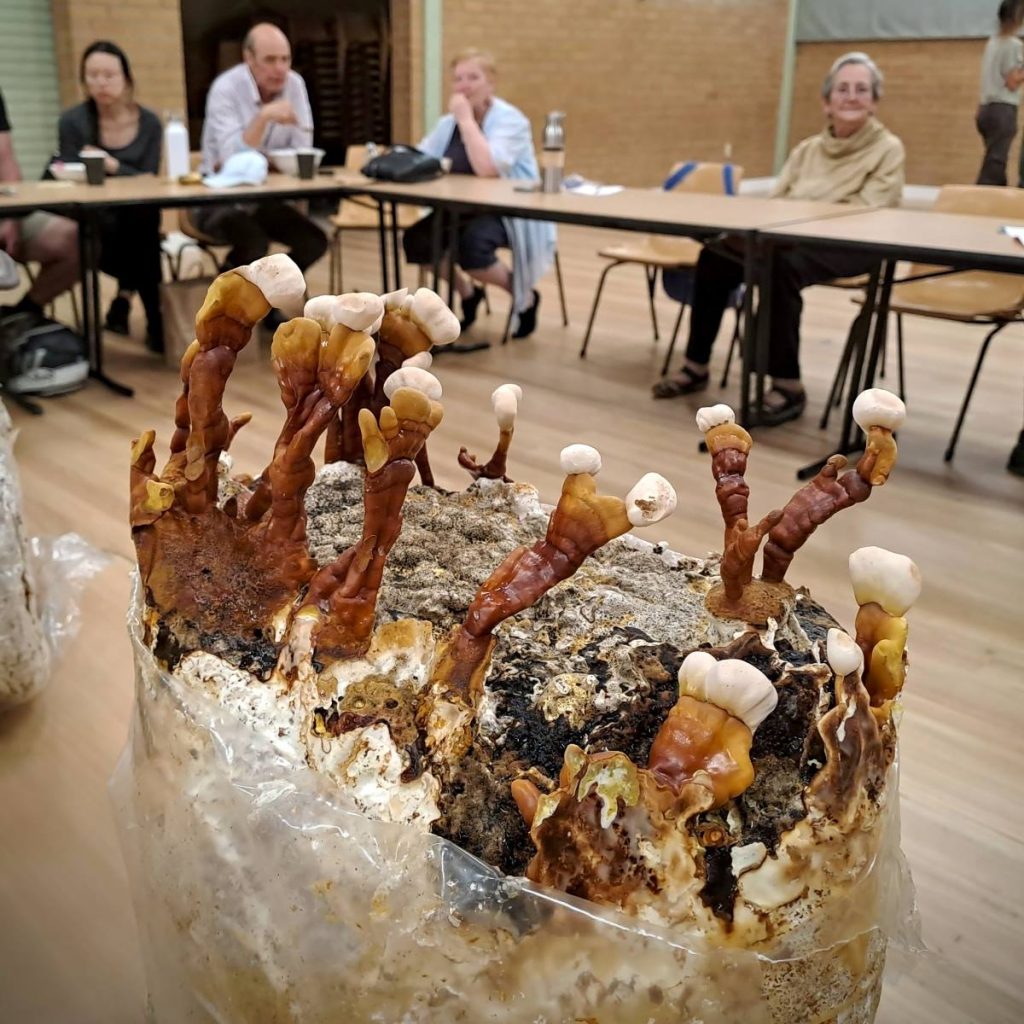
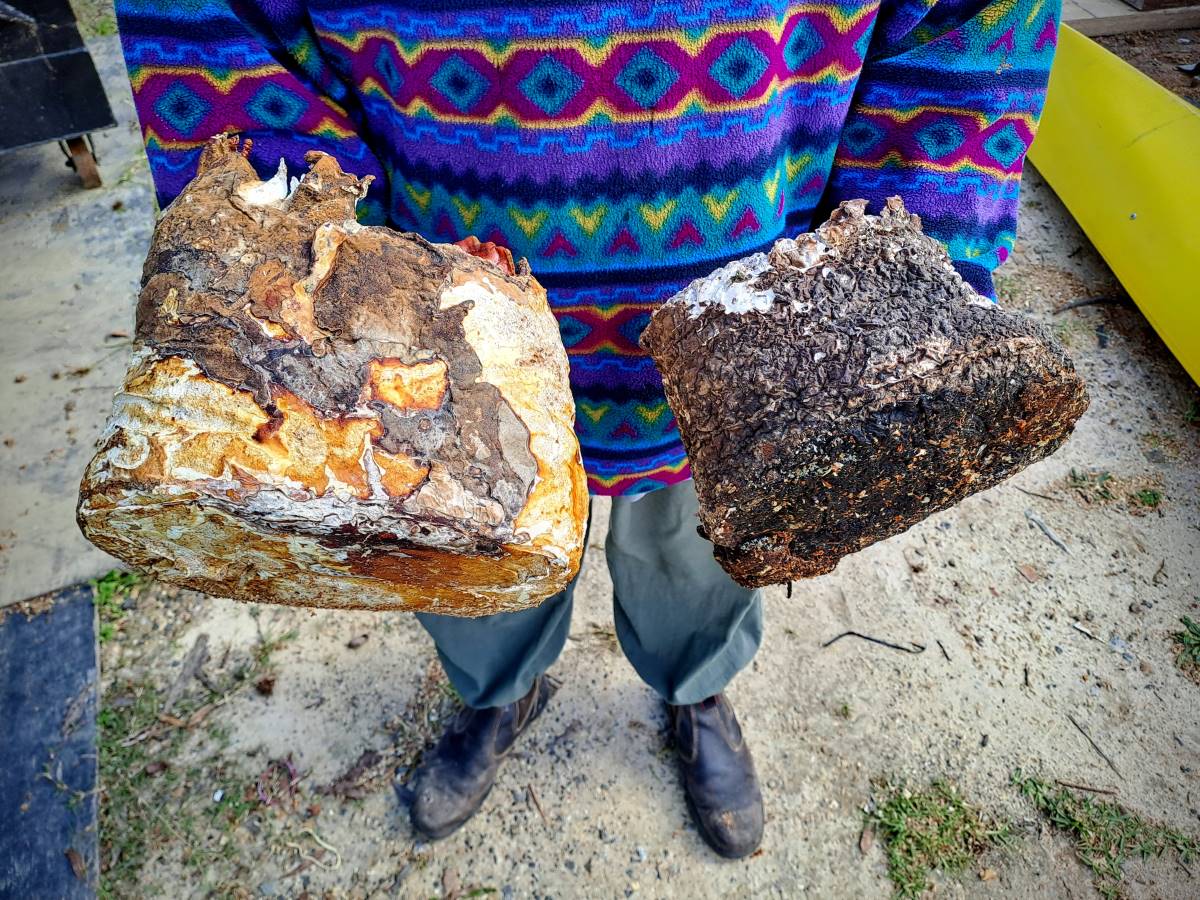
Intrigued by the potential uses of mycelium, Alex is experimenting with Reishi mycelium blocks which he has placed outdoors to monitor their endurance over the course of a year. “I will start to work on some moulds to shape some objects and see what works best,” he said. “Doing garden beds or pot plants in mycelium can be nice. And why not a new type of mycelium-based Esky to go to the beach?”
Reishi mycelium blocks at different stages of weathering.
Alex is committed to sharing his produce and knowledge with the Blue Mountains community. He was recently an invited guest speaker at a Permaculture Blue Mountains event at the Mid Mountains Neighbourhood Centre in Lawson, and he has started to run workshops in which he teaches people how to grow mushrooms at home: “I hope one day everyone knows how to grow mushrooms the same way we know how to grow a tomato plant.”
Alex selling his produce and growing kits at RoseyRavelston Books Mini Markets in Lawson.
If you would like to learn how to grow Lion’s Mane and use it medicinally, Alex will be hosting a workshop with Middle Path Medicine on May 4 in Katoomba. Event details here.
Further Reading:
Mycoremediation brings the fungi to waste disposal and ecosystem restoration (mongabay.com)
5 ways fungi could change the world, from cleaning water to breaking down plastics (theconversation.com)
5 sustainable alternatives with use of Mushrooms Mycelium | World Economic Forum (weforum.org)
How mushrooms, microorganisms could transform food packaging | World Economic Forum (weforum.org)
This story has been produced as part of a Bioregional Collaboration for Planetary Health and is supported by the Disaster Risk Reduction Fund (DRRF). The DRRF is jointly funded by the Australian and New South Wales governments.
We had a thoroughly enjoyable final Skill Share Saturday for the year yesterday with Qigong, Fashion Upcycling, Seed Saving and Bushcare! We shared seeds from local gardens and harvested carrots, as well as Mizuna, Broad Bean, Daikon and Land Cress seeds from the Planetary Health garden. We then packaged up (and shared) our first Upper Mountains Seed Savers packs for our fledgling Seed Bank. In Bushcare it`s very exciting to see whole new areas of the Planetary Health Precinct open up as we remove invasive weeds. It`s been a year of great progress as we`ve restored habitat for wildlife and given local native plants the opportunity to flourish and re-establish on the site.
Join the Planetary Health Centre this Sat 6 Dec for the last Skill Share Saturday of the year: Qigong at 9am, Seed Saving & Gardening Group at 10am, and Bushcare at 1.30pm. One perfect day with great company, great coffee and food, and great steps for living a healthy balanced life, while also contributing to the health of our planet for present and future generations. All ages welcome!
Registration links in profile and below.
Register for Qigong here: https://bit.ly/48wlHjD Register for Seed Saving & Gardening here: https://bit.ly/4prcRe7 Register for Bushcare here: https://bit.ly/4oAFDrz
We have a rare opportunity to learn about the newest and best possible ways to support family and community members struggling with mental health issues, at a free talk and afternoon tea provided by Upper Blue Mountains Sunrise Rotary at the Planetary Health Centre at 2pm this Saturday 29 Nov. Hear from Peter Joseph AM, Chair of the Black Dog Institute, and Professor Helen Christensen AO, Fellow of the Australian Academy of Science and former Executive Director and Chief Scientist at the Black Dog Institute. They`ll be in conversation with journalist Emma Rossi. Dr Christensen is a pioneer in using the internet to reach young people struggling with depression. Her digital mental health interventions are used by millions globally, delivering evidence-based therapy for depression, anxiety, and suicide prevention. Her research uses data from smartphones and wearables – like movement, screen use, and sleep – to detect early signs of mental health issues. Bookings essential here (link in profile): https://bit.ly/4oOnYxz
This Saturday Sherlie McMillan from Rotarians 4 Planetary Health will be running a workshop on How to use a sewing machine from 9am at the Planetary Health Centre in Katoomba. Learn how to set up a machine, service it, troubleshoot when it`s not sewing correctly, and learn some basic sewing skills.
Bookings essential here (link in profile): https://events.humanitix.com/how-to-use-your-sewing-machine
NB. This class is a prerequisite for our very popular Fashion Upcycling classes held once a month.
We`re thrilled to announce that Professor Helen Christensen, a pioneer in using the internet to reach young people struggling with depression, will be joining the conversation with Peter Joseph AM from the Black Dog Institute and journalist Emma Rossi at the Planetary Health Centre at 2pm this Saturday 29 November. Helen was the Executive Director and Chief Scientist for the Black Dog Institute for 10 years and has now been elected a Fellow of the Australian Academy of Science. Her digital mental health interventions are used by millions globally, delivering evidence-based therapy for depression, anxiety, and suicide prevention. Her research uses data from smartphones and wearables – like movement, screen use, and sleep – to detect early signs of mental health issues. This free event is being co-hosted by Upper Blue Mountains Sunrise Rotary and the Blue Mountains Planetary Health Initiative. Afternoon tea will be provided. Bookings essential here (link in profile): https://bit.ly/4oOnYxz
Human composting is increasingly being legalised around the world. Read about it in Katoomba Area Local News here (link in profile): https://www.katoombalocalnews.com/legalising-human-composting/
If you’d like to see this option available in NSW you can now sign a live petition to the NSW Parliament here (link in profile): https://bit.ly/43QIHbz
Thanks to everyone who contributed to deliver a fantastic Disaster Risk Awareness Expo and Family Day yesterday. @mark_greenhill_mayor opened the event at which we celebrated the 13th birthday of Betty the Asbestos Education House; @firecoat_au demonstrated and launched its range of fire retardant products that can help protect homes, gardens and even electricity poles; the Bushfire Retrofit Toolkit was launched; Santa arrived and delighted young and old; and @plantinspired99 and Action for Animals fed us all with a delicious plant-based sausage sizzle. The day was filled with talks, workshops, stalls and the sharing of a huge amount of expertise to keep us, and the other species we share our planet with, safe and healthy! @southkatoomba.rfb @nswses @fireandrescuensw @nswrfs @redcrossleura @redcrossau @shelter.building.design @firehalo.au @asbestosawareness @amelie_ecology @bbagsbluemtns @wireswildliferescue @handsheartfeet
Our marquee is up and we`re excited about our Expo and Family Day tomorrow (Sat 22 Nov). There`s something for everyone from a free sausage sizzle, plants from Santa and drumming and pollinator workshops, to sessions on keeping you and our community safe from extreme weather events and hazardous substances like mould and asbestos. Learn how intumescent paints can slow the spread of fire and pick up a sample pot; check out all our emergency service organisations; learn how to dispose of hazardous materials; paint a native orchid, make some seed balls or sew a boomerang bag to give as plastic-free Christmas presents this year; enjoy coffee and locally made sweets; and get tips on how to retrofit your home safely and beautifully to be prepared for future extreme weather events. View the full program and register here (link in profile): https://bit.ly/4nFrY1J
There are so many new and innovative ways of doing things, like the new cooking techniques being explored by Michael from Good Fat Pastry, and the new fire protection methods being launched at the Planetary Health Centre`s Expo and Family Day on Sat 22 Nov. Check out Michael’s recent presentation at the Food Security Fair in our video here: https://bit.ly/4pnXbIg (link in profile) and come along to taste his delicious carrot cake and pastries at the Expo on Saturday. Check out the program and register to attend here (link in profile): https://bit.ly/4nFrY1J
In 2006 Peter Joseph’s son Michael suicided after a 14-year episodic battle with mental illness. Peter is now the Chair of the Black Dog Institute which is working to achieve better outcomes for all those struggling with mental health issues. Journalist Emma Rossi will engage Peter in an intimate and moving conversation about a life of purpose and mental health advocacy. As a Rotary scholar Peter will also reflect on how Rotary helped shape his values and sense of purpose as a young man - and how those early lessons continue to guide his work today. This free event is being hosted by the Upper Blue Mountains Sunrise Rotary Club and the Blue Mountains Planetary Health Initiative on Saturday 29 November from 2-4pm at the Planetary Health Centre at 33-39 Acacia St Katoomba. Afternoon tea will be provided. Bookings essential here (link in profile): https://bit.ly/4oOnYxz
Learn about intumescent fire retardant paint and a range of other strategies to prepare for extreme weather events, and to manage hazardous materials, at the upcoming Expo and Family Day at the Planetary Health Centre on Sat 22 Nov. You can register to attend here (link in profile): https://bit.ly/4nFrY1J We checked out how intumescent paint works in this video.
When temperatures reach a certain point the intumescent paint begins to swell and expand, often up to 50 times its original thickness. It forms a thick, carbonaceous "char" that acts as an insulating barrier. This layer slows the rate at which heat reaches the structural elements and buys valuable time for people to safely exit a building during a fire. It makes the structure safer for firefighters and rescue teams. #intumescentpaint #fireretardant #bushfire @firecoat_au...
Mould, lead paint, asbestos, silica dust from engineered stone bench tops and a wide range of chemicals, are amongst some of the many hazardous substances entering our environment and negatively impacting our health. Asbestos is found in over 3000 products including textured paints, moulded garden pots, brake pads and clutch linings in older cars, floor and ceiling tiles, lino, fibro, roofing, pipes and gutters, hot water systems, backing for switchboards and insulation boards in air-conditioning ducts, insulation, sealants, fillers, caulking and adhesives, gaskets for industrial and lab equipment and more. We’ll have information to take away and Blue Mountains City Council and the Asbestos and Hazardous Materials Consultants Association (AHCA) will be running free workshops on how to identify and manage these hazardous substances at the Planetary Health Centre`s Disaster Risk Awareness Expo in Katoomba on Sat 22 Nov. Find out more and register to attend here (link in profile): https://bit.ly/4nFrY1J
Belle Butler is a writer, musician and occasional photographer. She likes mix-and-matching these artforms and often explores the same themes through each of them. Her short fiction has been published in numerous Australian literary journals and she recently received a WestWords Fellowship and Mentorship with Delia Falconer for her novel manuscript, ‘River.’ Hopefully it will be published one day.
When Dan Gaffney found out he was having a son, it prompted action to break a cycle of inter-generational disconnection. What began as a personal commitment to self-work has since grown into a powerful communal practice helping men become more emotionally literate, accountable, conscious and connected.
Enjoyed this article? Please help spread the word :)
Support the Future of Solutions-Focused Neighbourhood News