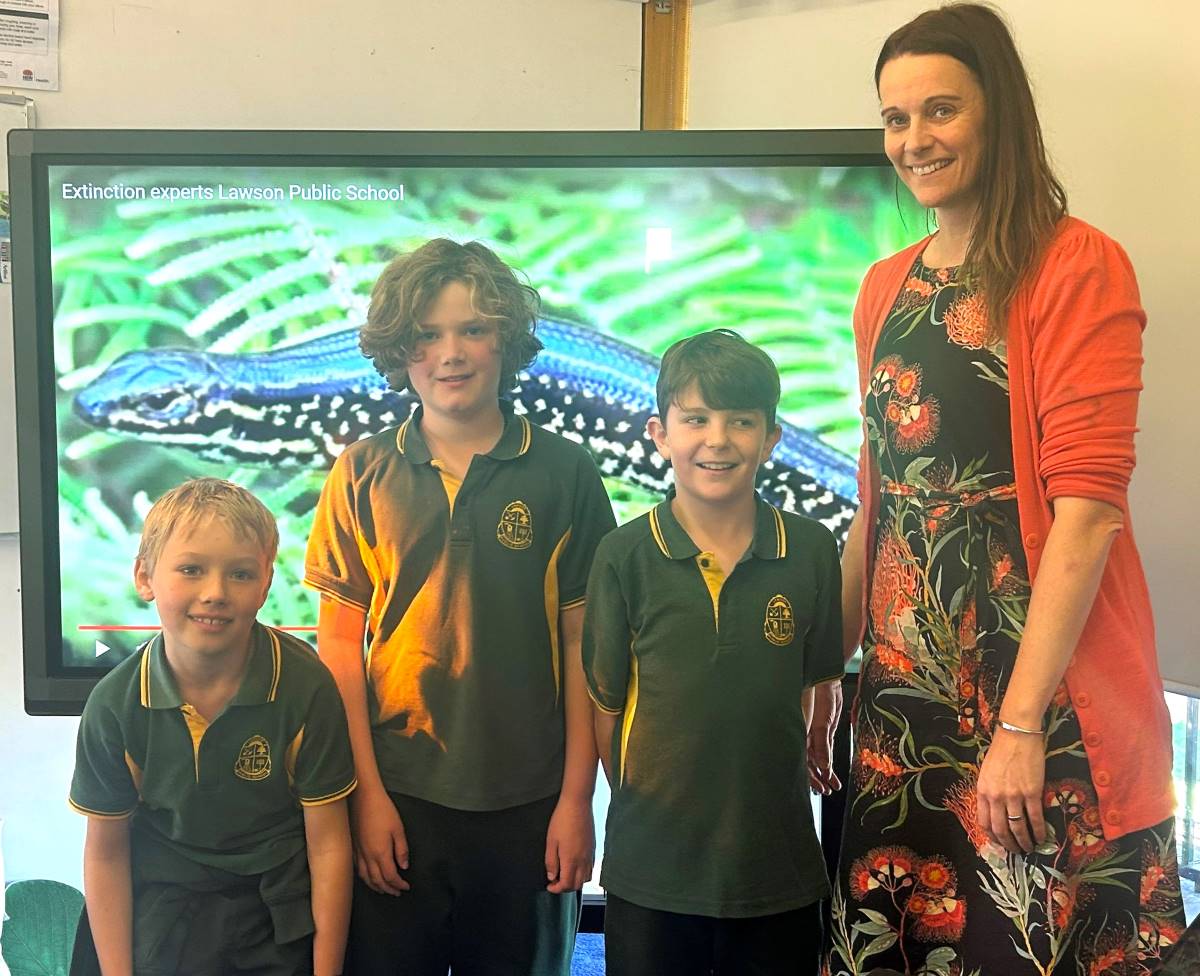
‘Extinction Experts’: Oliver, Leo and Timothy with teacher Jane Truswell (not pictured: Archer and Wren)
Story by Liz Durnan
When school kids around the state heard the call: Invent or innovate something that will change our world and leave a lasting impact, Lawson Public School students rose to the challenge.
The day I visit Lawson Public School, the children gathered in the library are buzzing with excitement. They’re fresh from taking part in this year’s Game Changer Challenge, with two of the three teams making it to the semi-finals.
Key Points:
The Game Changer Challenge is an annual event by the NSW Department of Education
In 2023 students were challenged to ‘invent or innovate something that will change our world and leave a lasting impact’
Lawson Public School took up the challenge in 2023 with impressive results
In the annual Game Changer Challenge, the NSW Department of Education sets a ‘Wicked Problem’ for primary and secondary schools around the state. This ‘design thinking competition’ encourages students to discover real-world solutions to real-world problems.
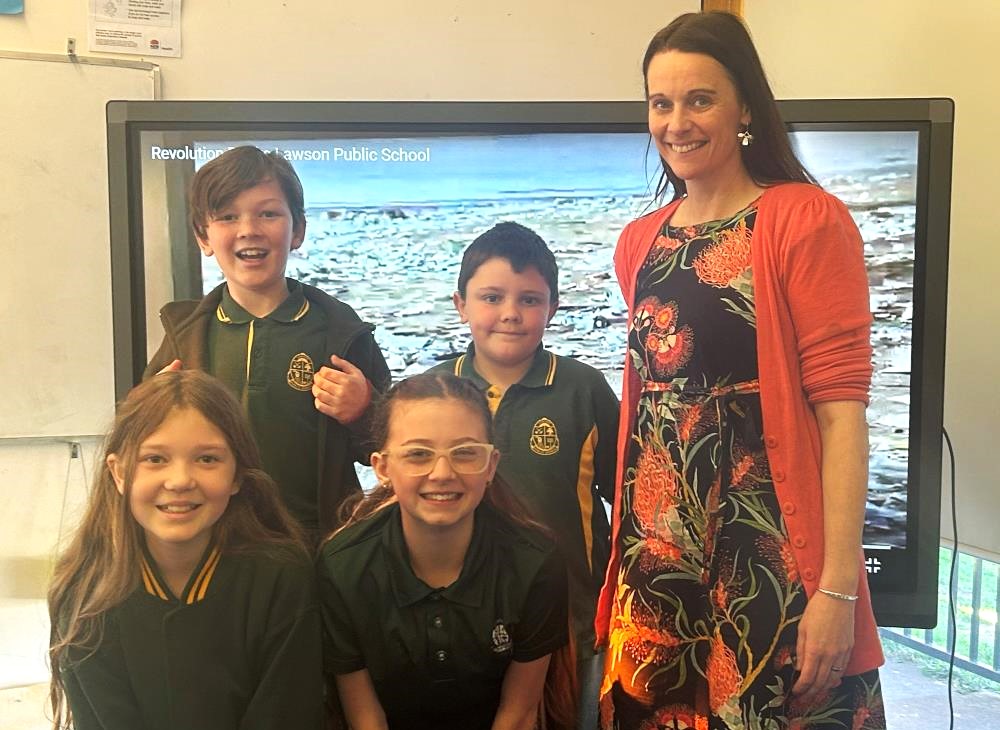
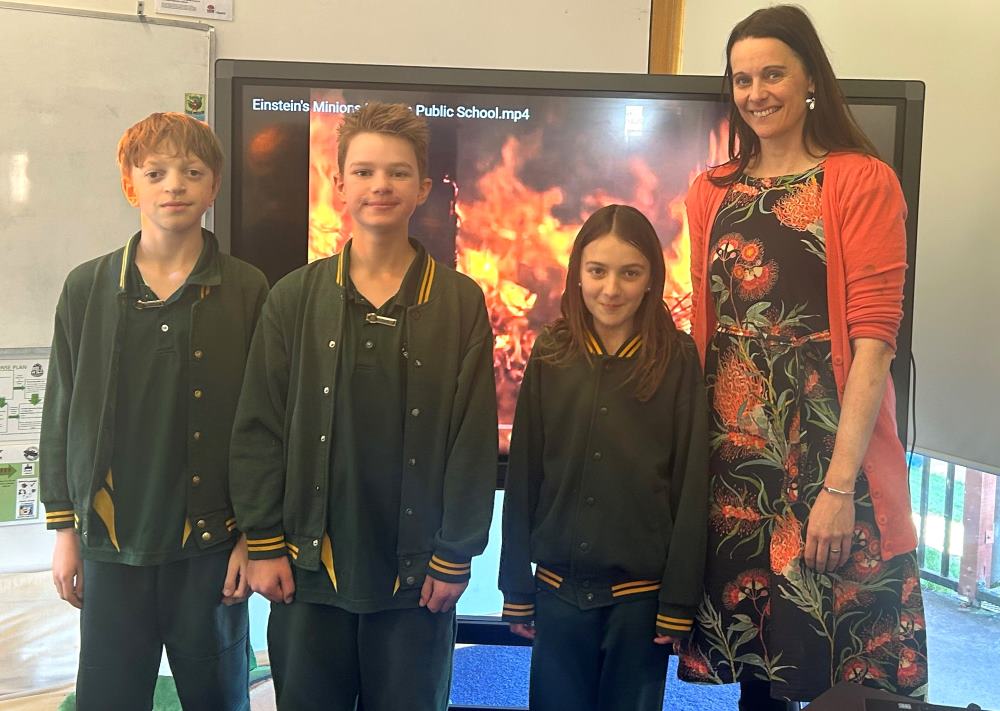
The three teams have devised their own names – Einstein’s Minions (years 5 & 6) are addressing the issue of bushfires; The Extinction Experts (years 3 & 4) look at species loss in the Blue Mountains; and The Revolution Ducks (years 4, 5 & 6) tackle the problem of littering.
Team ‘Revolution Ducks’: Devendra, Lachlan, Talara and Luella with teacher Jane Truswell (not pictured: Sadie)
According to Learning & Support Teacher Jane Truswell, the Game Changer Challenge inspires the students to think carefully about practical ways they can make an impact.
“It has given them a sense of agency to face the world’s problems,” Jane says. “If they want to talk to somebody in the field, they can interview an ecologist or they can talk to people from different services and find out more.
This is not something they’ve done before, so it’s really helped connect their learning with things they can change in the world. – Jane Truswell, Learning & Support Teacher
Relieving Principal Hayley Cross agrees: “Because the students went out to survey people for their research, the Challenge provided amazing learning opportunities. They were able to tap into a whole other world of learning that allows this out-of-the-box thinking.”
Once each group identified a problem to tackle, they invented their solution and designed a prototype. According to Jane, this design process helped students engage with the reality of the problem.
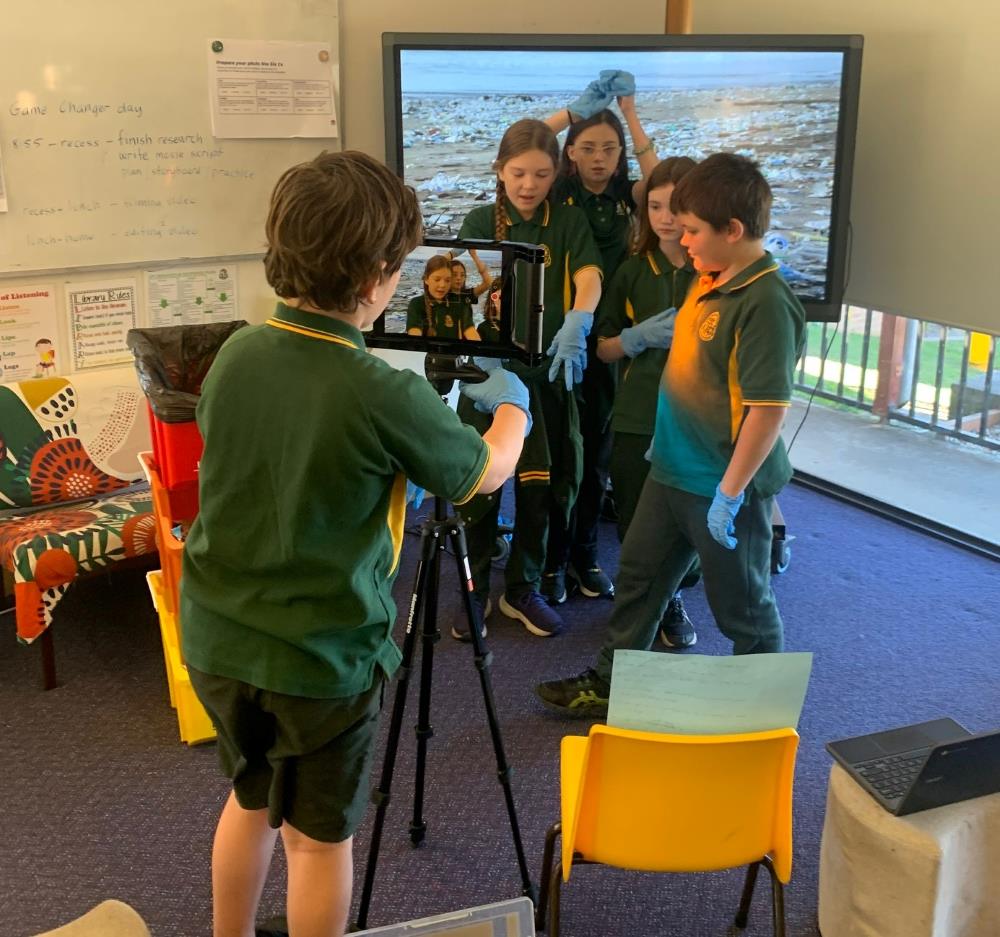
Each group then filmed a two-minute video outlining the solution and the process.
Team ‘Einstein’s Minions’: Harry, Rhys and Seren ( Not pictured: Alby and Mytchell)
I watch these videos with genuine interest, impressed at the innovative ideas conceived by these students. They are only between 8 and 11 years of age.
Team Extinction Experts
The Extinction Experts looked at animals that are vulnerable to extinction, and focused specifically on threats faced by local species such as the Blue Mountains Water Skink and the Eastern Pygmy Possum.
After finding out more about these creatures, the group proposed an invention they called ‘the hideaway tube’ – a weatherproof retreat space the animal could hide in to cope with extreme events.
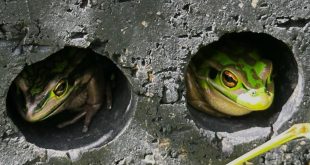
As part of their research, the students spoke to Julie Favell from the Lithgow Environment Group, learning about post-bushfire research on homes for Pygmy Possums and how people have reused pipes to create homes for the animals.
Team Revolution Ducks
Meanwhile, The Revolution Ducks focused on the impact of littering, examining rubbish sorting and waste minimisation initiatives at Lawson.
The Revolution Ducks team work on their video submission
Their idea was to make this waste more sortable with the invention of a wearable backpack designed specifically for waste: complete with sections for people to sort their waste on the go.
Team Einstein’s Minions
The third team, Einstein’s Minions, investigated bushfires and conceived a complex solution involving temperature sensors and sprinklers that would react to temperatures, cooling down surfaces in the event of bushfire. For this, they extensively researched backburning and the ways it’s used to fight bushfires.
In each case, the problem focuses on an issue that directly affects their local community. The students surveyed their peers extensively, then their wider community, to discover the things that impact them, and what they worry about.
They also found their solutions within that community, mostly from experts with local knowledge.
It’s even more impressive to learn that the children came up with many of the ideas independently, with only a little help and encouragement from Jane.
Design Thinking
Along with playbooks provided by the Department of Education to teach design thinking strategies, the teams worked together to use research to find solutions.
Design thinking is a human-centred process to solving complex problems.
Empathy and collaboration are at the heart of design thinking.
The five-step process starts by encouraging problem solvers to walk in the shoes of those experiencing the ‘problem’ to gain a deeper insight into the challenges and issues they face (empathy).
This knowledge is then used to develop a clear problem statement (define), work on solutions (ideate), turn these solutions into tangible products (prototype) and then see whether the solution will work (test).
When I talk to the students about their ideas, their enthusiasm is palpable. I hear how they’re directly affected by the issues they address, such as bushfires, and how closely some have been personally impacted by them.
“We had loads of ideas actually,” Harry from Einstein’s Minions tells me. “And I don’t know how we decided on bushfires. It’s something you think about quite a bit.”
While they all agree the project was ‘lots of fun’, they’re candid about the difficulties at times. They articulated one of the most important life lessons: you make mistakes, fail and repeat the process until you get it.
Making the video was another key learning experience, also completed with minimal help from teachers who mainly provided guidance on using the technology and script storyboarding.
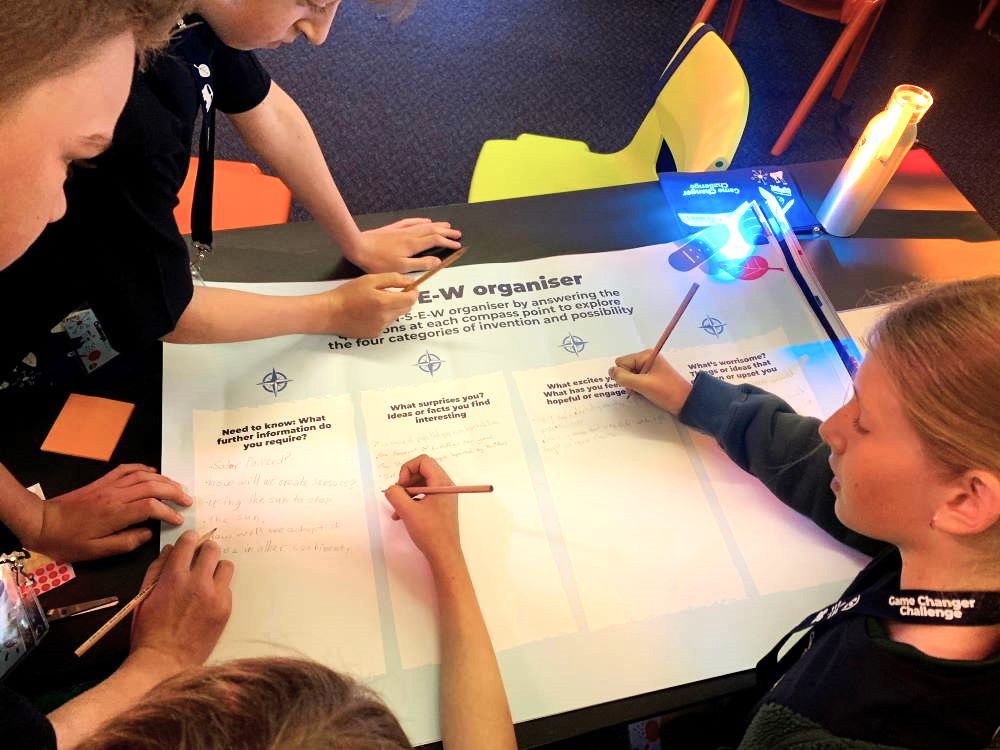
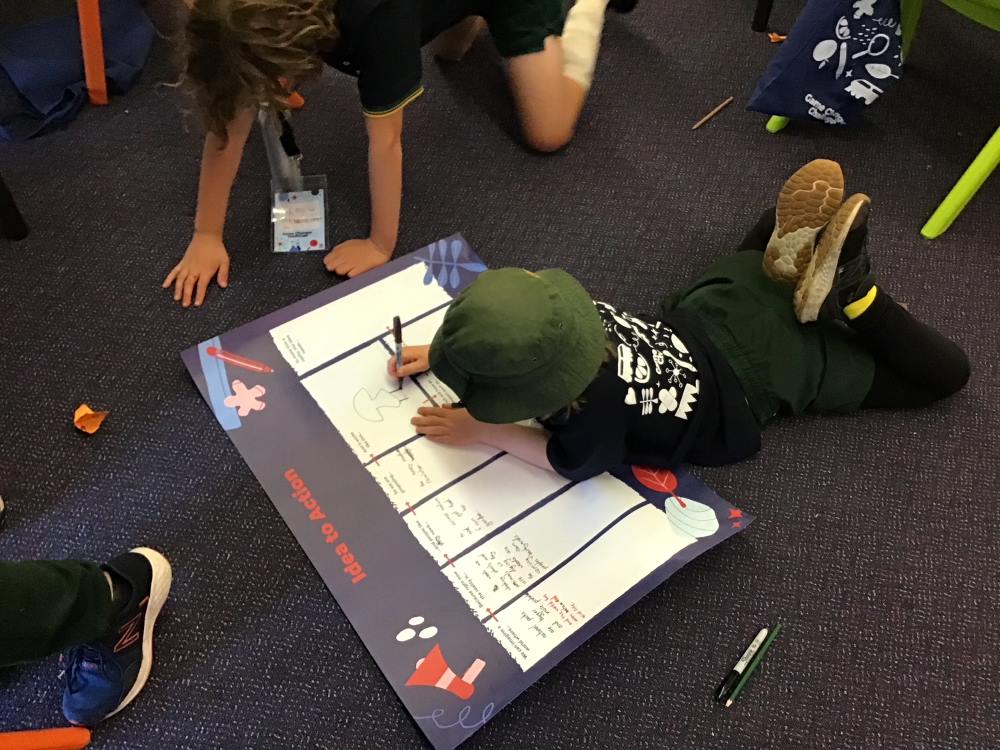
The Einstein’s Minion’s team participate in a semi-final brainstorming session.
This all fostered a collaborative supportive approach among the children with the teams helping each other out despite them being up against each other in the competition.
According to Hayley, the roles each student took on within the group enhanced not only the learning process, but also their social skills.
“They had to work as a team, even though many of the academically bright kids can be very solo,” Hayley says.
“This was challenging at first because they had to look at their skills: some might be communicators; some might have emerging leadership skills. They didn’t always get the role they wanted but they took it maturely and worked together.
“And they completed the project, which doesn’t always happen because they’re interested in lots of new things. But here, we had a deadline to stick to, so it really allowed us to do that full circle.”
She is equally proud of all the teams and embraced the idea of the Game Changer Challenge when presented by Jane.
The Extinction Experts team work on large design canvases during the semi final
For Jane, discovering solutions empowered the students to make sense of the world.
The Game Changer Challenge is very much around listening to what kids would like and how they’d like to make the world a better place. – Jane Truswell
Hayley agrees. “Sometimes people say, ‘Oh, you’re just kids’. But kids make a huge difference. And it starts there, doesn’t it?”
120 teams took part in the virtual semi-finals of the Game Changer Challenge, held in Week Six and Seven of Term Three.
This story has been produced as part of a Bioregional Collaboration for Planetary Health and is supported by the Disaster Risk Reduction Fund (DRRF). The DRRF is jointly funded by the Australian and New South Wales governments.
We had a thoroughly enjoyable final Skill Share Saturday for the year yesterday with Qigong, Fashion Upcycling, Seed Saving and Bushcare! We shared seeds from local gardens and harvested carrots, as well as Mizuna, Broad Bean, Daikon and Land Cress seeds from the Planetary Health garden. We then packaged up (and shared) our first Upper Mountains Seed Savers packs for our fledgling Seed Bank. In Bushcare it`s very exciting to see whole new areas of the Planetary Health Precinct open up as we remove invasive weeds. It`s been a year of great progress as we`ve restored habitat for wildlife and given local native plants the opportunity to flourish and re-establish on the site.
Join the Planetary Health Centre this Sat 6 Dec for the last Skill Share Saturday of the year: Qigong at 9am, Seed Saving & Gardening Group at 10am, and Bushcare at 1.30pm. One perfect day with great company, great coffee and food, and great steps for living a healthy balanced life, while also contributing to the health of our planet for present and future generations. All ages welcome!
Registration links in profile and below.
Register for Qigong here: https://bit.ly/48wlHjD Register for Seed Saving & Gardening here: https://bit.ly/4prcRe7 Register for Bushcare here: https://bit.ly/4oAFDrz
We have a rare opportunity to learn about the newest and best possible ways to support family and community members struggling with mental health issues, at a free talk and afternoon tea provided by Upper Blue Mountains Sunrise Rotary at the Planetary Health Centre at 2pm this Saturday 29 Nov. Hear from Peter Joseph AM, Chair of the Black Dog Institute, and Professor Helen Christensen AO, Fellow of the Australian Academy of Science and former Executive Director and Chief Scientist at the Black Dog Institute. They`ll be in conversation with journalist Emma Rossi. Dr Christensen is a pioneer in using the internet to reach young people struggling with depression. Her digital mental health interventions are used by millions globally, delivering evidence-based therapy for depression, anxiety, and suicide prevention. Her research uses data from smartphones and wearables – like movement, screen use, and sleep – to detect early signs of mental health issues. Bookings essential here (link in profile): https://bit.ly/4oOnYxz
This Saturday Sherlie McMillan from Rotarians 4 Planetary Health will be running a workshop on How to use a sewing machine from 9am at the Planetary Health Centre in Katoomba. Learn how to set up a machine, service it, troubleshoot when it`s not sewing correctly, and learn some basic sewing skills.
Bookings essential here (link in profile): https://events.humanitix.com/how-to-use-your-sewing-machine
NB. This class is a prerequisite for our very popular Fashion Upcycling classes held once a month.
We`re thrilled to announce that Professor Helen Christensen, a pioneer in using the internet to reach young people struggling with depression, will be joining the conversation with Peter Joseph AM from the Black Dog Institute and journalist Emma Rossi at the Planetary Health Centre at 2pm this Saturday 29 November. Helen was the Executive Director and Chief Scientist for the Black Dog Institute for 10 years and has now been elected a Fellow of the Australian Academy of Science. Her digital mental health interventions are used by millions globally, delivering evidence-based therapy for depression, anxiety, and suicide prevention. Her research uses data from smartphones and wearables – like movement, screen use, and sleep – to detect early signs of mental health issues. This free event is being co-hosted by Upper Blue Mountains Sunrise Rotary and the Blue Mountains Planetary Health Initiative. Afternoon tea will be provided. Bookings essential here (link in profile): https://bit.ly/4oOnYxz
Human composting is increasingly being legalised around the world. Read about it in Katoomba Area Local News here (link in profile): https://www.katoombalocalnews.com/legalising-human-composting/
If you’d like to see this option available in NSW you can now sign a live petition to the NSW Parliament here (link in profile): https://bit.ly/43QIHbz
Thanks to everyone who contributed to deliver a fantastic Disaster Risk Awareness Expo and Family Day yesterday. @mark_greenhill_mayor opened the event at which we celebrated the 13th birthday of Betty the Asbestos Education House; @firecoat_au demonstrated and launched its range of fire retardant products that can help protect homes, gardens and even electricity poles; the Bushfire Retrofit Toolkit was launched; Santa arrived and delighted young and old; and @plantinspired99 and Action for Animals fed us all with a delicious plant-based sausage sizzle. The day was filled with talks, workshops, stalls and the sharing of a huge amount of expertise to keep us, and the other species we share our planet with, safe and healthy! @southkatoomba.rfb @nswses @fireandrescuensw @nswrfs @redcrossleura @redcrossau @shelter.building.design @firehalo.au @asbestosawareness @amelie_ecology @bbagsbluemtns @wireswildliferescue @handsheartfeet
Our marquee is up and we`re excited about our Expo and Family Day tomorrow (Sat 22 Nov). There`s something for everyone from a free sausage sizzle, plants from Santa and drumming and pollinator workshops, to sessions on keeping you and our community safe from extreme weather events and hazardous substances like mould and asbestos. Learn how intumescent paints can slow the spread of fire and pick up a sample pot; check out all our emergency service organisations; learn how to dispose of hazardous materials; paint a native orchid, make some seed balls or sew a boomerang bag to give as plastic-free Christmas presents this year; enjoy coffee and locally made sweets; and get tips on how to retrofit your home safely and beautifully to be prepared for future extreme weather events. View the full program and register here (link in profile): https://bit.ly/4nFrY1J
There are so many new and innovative ways of doing things, like the new cooking techniques being explored by Michael from Good Fat Pastry, and the new fire protection methods being launched at the Planetary Health Centre`s Expo and Family Day on Sat 22 Nov. Check out Michael’s recent presentation at the Food Security Fair in our video here: https://bit.ly/4pnXbIg (link in profile) and come along to taste his delicious carrot cake and pastries at the Expo on Saturday. Check out the program and register to attend here (link in profile): https://bit.ly/4nFrY1J
In 2006 Peter Joseph’s son Michael suicided after a 14-year episodic battle with mental illness. Peter is now the Chair of the Black Dog Institute which is working to achieve better outcomes for all those struggling with mental health issues. Journalist Emma Rossi will engage Peter in an intimate and moving conversation about a life of purpose and mental health advocacy. As a Rotary scholar Peter will also reflect on how Rotary helped shape his values and sense of purpose as a young man - and how those early lessons continue to guide his work today. This free event is being hosted by the Upper Blue Mountains Sunrise Rotary Club and the Blue Mountains Planetary Health Initiative on Saturday 29 November from 2-4pm at the Planetary Health Centre at 33-39 Acacia St Katoomba. Afternoon tea will be provided. Bookings essential here (link in profile): https://bit.ly/4oOnYxz
Learn about intumescent fire retardant paint and a range of other strategies to prepare for extreme weather events, and to manage hazardous materials, at the upcoming Expo and Family Day at the Planetary Health Centre on Sat 22 Nov. You can register to attend here (link in profile): https://bit.ly/4nFrY1J We checked out how intumescent paint works in this video.
When temperatures reach a certain point the intumescent paint begins to swell and expand, often up to 50 times its original thickness. It forms a thick, carbonaceous "char" that acts as an insulating barrier. This layer slows the rate at which heat reaches the structural elements and buys valuable time for people to safely exit a building during a fire. It makes the structure safer for firefighters and rescue teams. #intumescentpaint #fireretardant #bushfire @firecoat_au...
Mould, lead paint, asbestos, silica dust from engineered stone bench tops and a wide range of chemicals, are amongst some of the many hazardous substances entering our environment and negatively impacting our health. Asbestos is found in over 3000 products including textured paints, moulded garden pots, brake pads and clutch linings in older cars, floor and ceiling tiles, lino, fibro, roofing, pipes and gutters, hot water systems, backing for switchboards and insulation boards in air-conditioning ducts, insulation, sealants, fillers, caulking and adhesives, gaskets for industrial and lab equipment and more. We’ll have information to take away and Blue Mountains City Council and the Asbestos and Hazardous Materials Consultants Association (AHCA) will be running free workshops on how to identify and manage these hazardous substances at the Planetary Health Centre`s Disaster Risk Awareness Expo in Katoomba on Sat 22 Nov. Find out more and register to attend here (link in profile): https://bit.ly/4nFrY1J
Liz Durnan has been writing and editing for digital and print media for over twenty five years, with an interest in sustainable building and travel, food and books. She has lived in cities all over the world, including London, New York and Sydney, before settling in the Blue Mountains where she has built a solar-passive strawbale home. When not writing, she loves cooking, overnight bushwalks and camping.
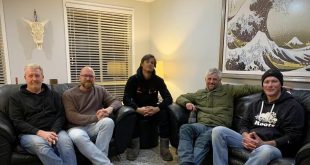
When Dan Gaffney found out he was having a son, it prompted action to break a cycle of inter-generational disconnection. What began as a personal commitment to self-work has since grown into a powerful communal practice helping men become more emotionally literate, accountable, conscious and connected.
Enjoyed this article? Please help spread the word :)
Support the Future of Solutions-Focused Neighbourhood News