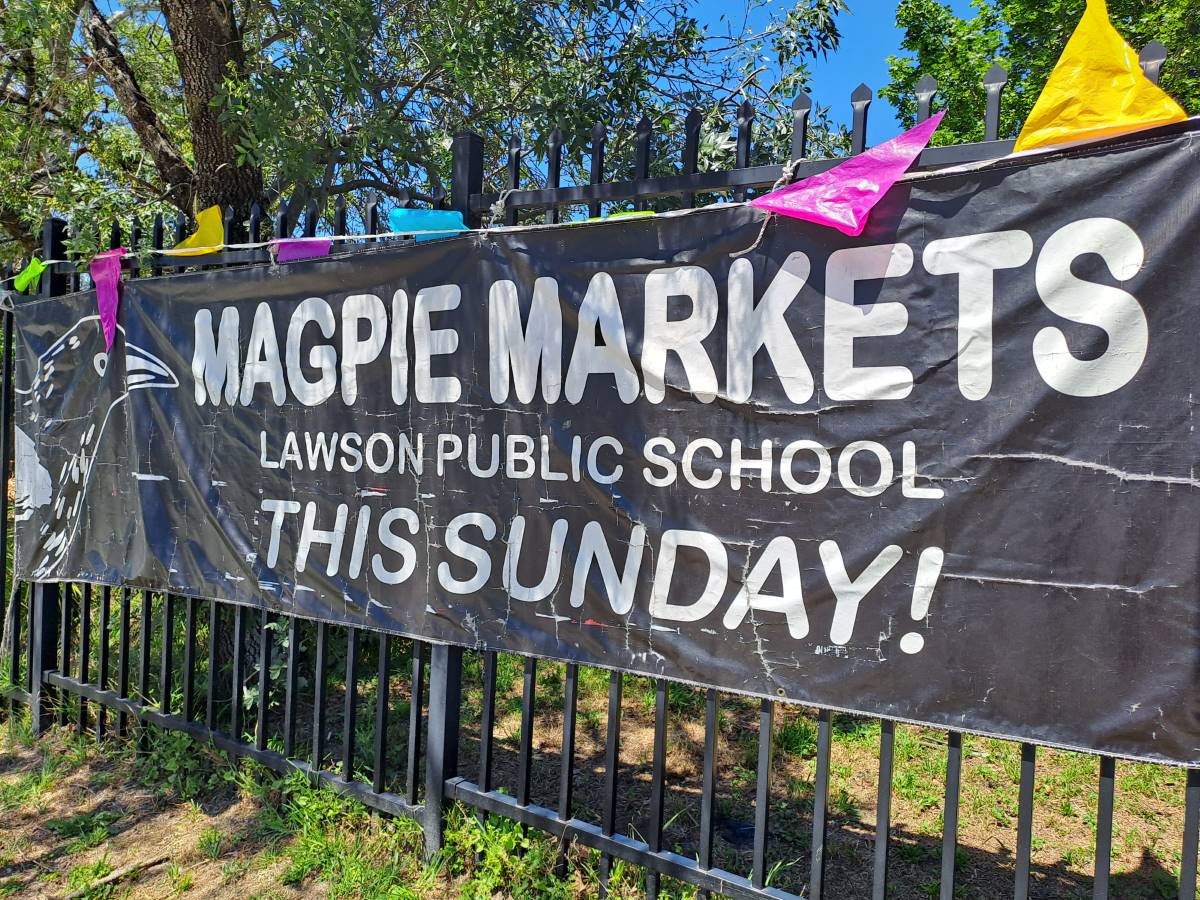
Magpie Markets in Lawson are a local institution providing a sustainable boost to the local economy. Recently a trial waste sorting and recycling hub has significantly reduced waste going to landfill. Find out more and meet some of the stallholders here.
Key Points:
Buying and selling at local markets reduces your carbon footprint and boosts the local economy.
Local markets bolster preparedness for times of instability by providing a system of sharing goods that doesn’t rely on global markets.
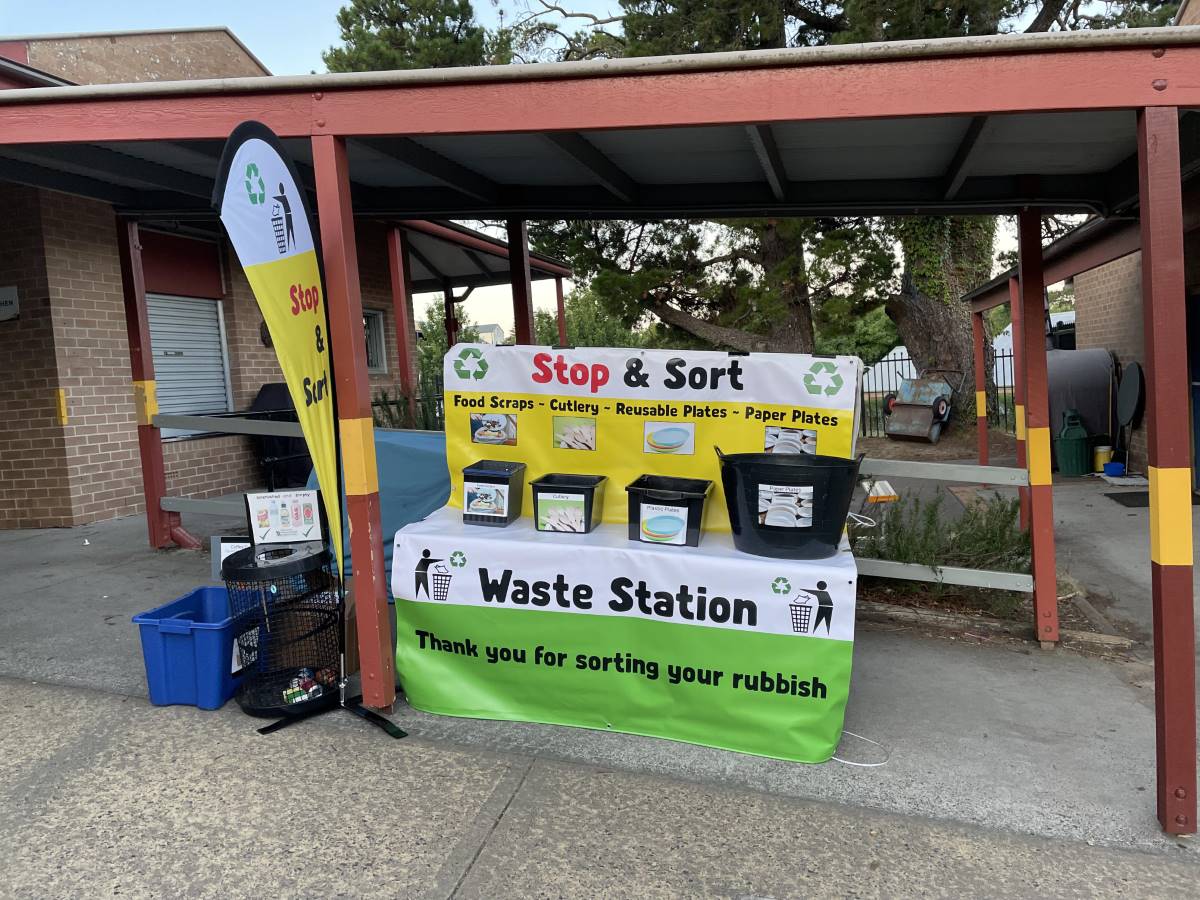
Lawson’s Magpie Markets have significantly reduced waste going to landfill by installing and managing new waste sorting stations.
Trotting off to Lawson’s Magpie Markets with my daughter recently, we overheard a common question-and-answer exchanged by passers-by: “Heading to the markets?” “Yep, you?” The conversation starter was not lost on my daughter, who looked up at me and remarked, “Everyone is going to the markets!”
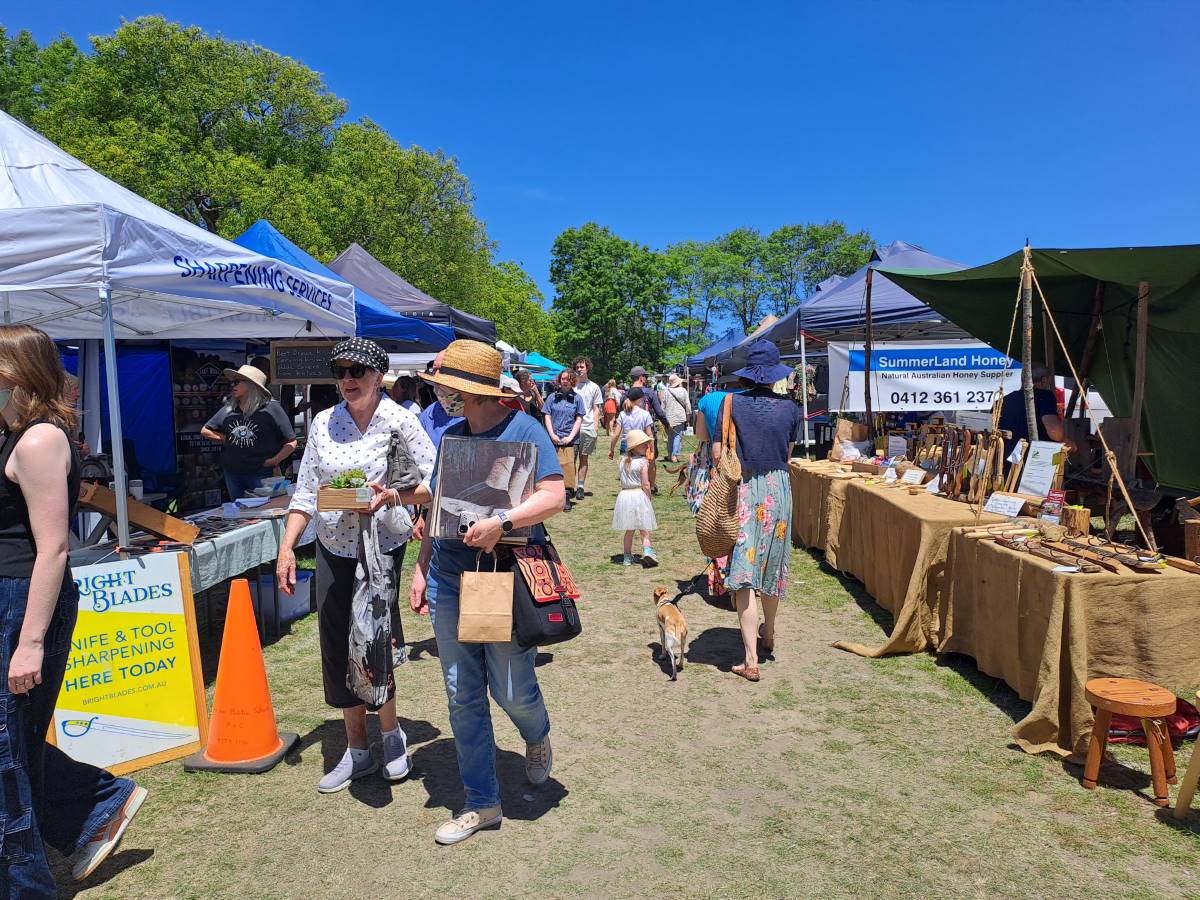
Indeed, Magpie Markets is a bit of a Lawson institution, and on the third Sunday of each month the town’s seams expand to accommodate the influx of sellers and buyers attending it. With over 100 stalls ranging from growers to artisans, second-hand goods to food, the Markets draw in an estimated 3000 visitors. Planning for succession, organiser Nicole Riley offers two stalls to younger sellers at heavily reduced rates.
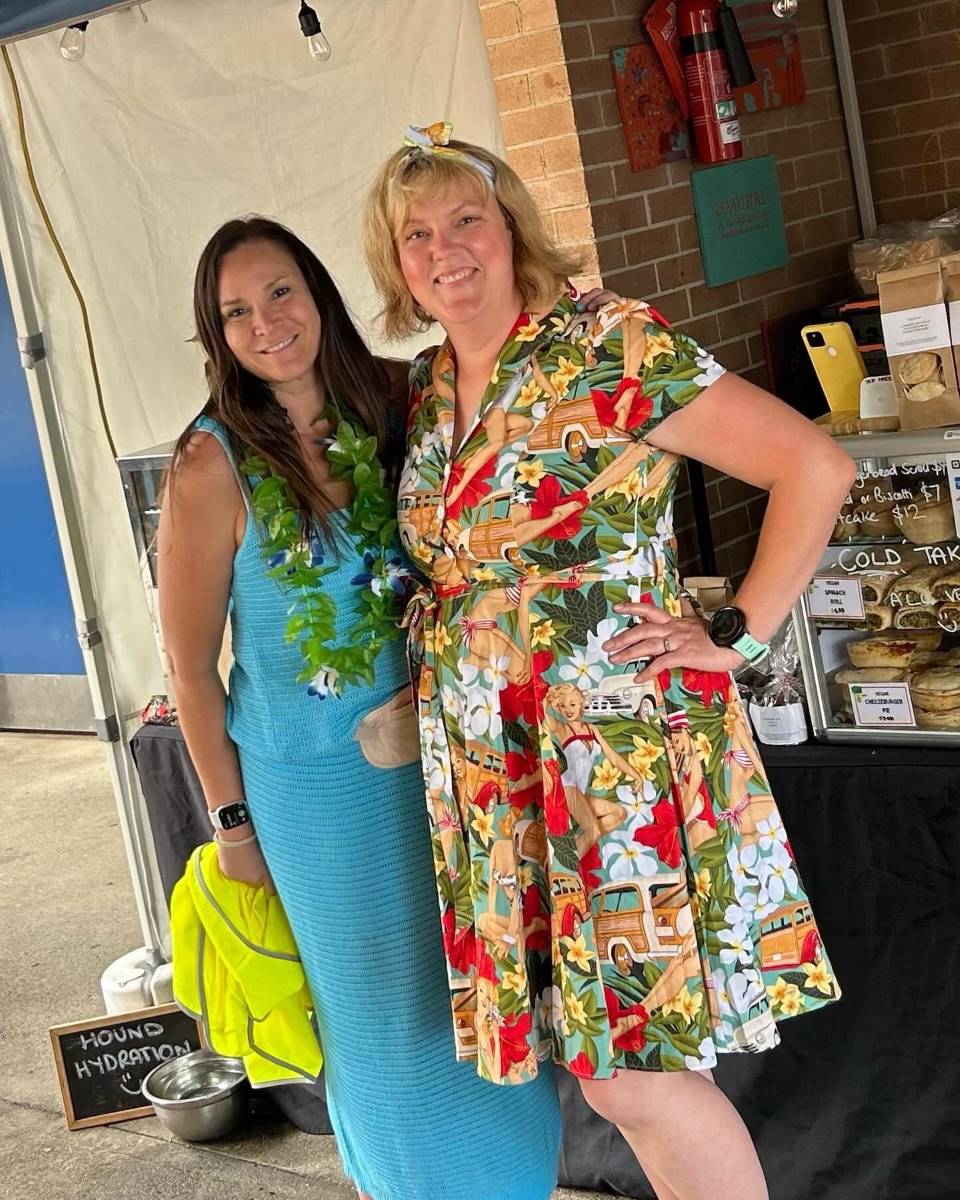
Nicole Riley with Kate, a stallholder at Magpie Markets(supplied)
Nicole Riley’s passion for markets came from her experiences travelling around Europe. “I went to every village and farmers market I could find to support the local farmers, producers and artisans. When I came back to Australia I had a passion for markets and bringing the community markets to my local area. I thought, the big companies don’t need our money, it’s the small family businesses that I wanted to support so that’s what I did!”
Located at Lawson Public School, within walking distance to train and bus stations, Magpie Markets is a convenient place to shop without need of a car for transport. The obvious ‘good for the planet/good for you’ equation is not limited to this singular aspect of market shopping.
Shopping at your local or nearby markets has numerous flow-on benefits. Buying food grown locally and goods that are made locally reduces your carbon footprint by cutting out significant transportation costs to the planet. This investment in local makers and growers boosts the local economy and builds an important community resource: a system of sharing goods that doesn’t rely on global markets to function. This bolsters community resilience and strengthens preparedness for times of instability.
Market-goers on a fine day in Lawson.
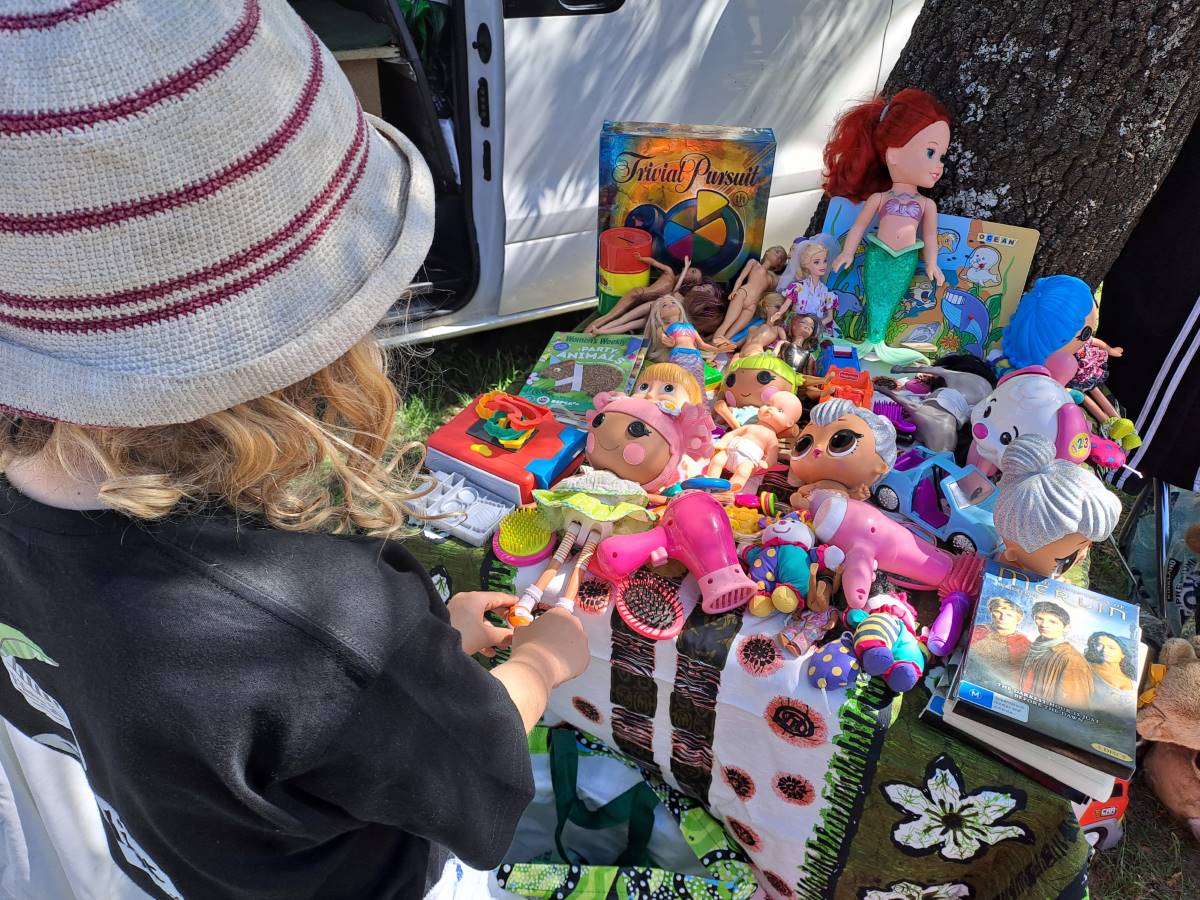
The particular abundance of second-hand items at Magpie ‘Up Style’ Markets makes it a convenient place to participate in the circular economy, and most goods sold at markets more generally have minimal or no packaging, which reduces waste going into landfill.
Perusing a pile of second-hand toys.
Dealing with waste sustainably
Waste generated at markets via food stalls can be a downside. However, in the case of Magpie Markets, the organiser, Nicole Riley, and members of Lawson Public School, have teamed up to drastically minimise the impact. Support teacher Cheryl Griswold explains: “The Market waste reduction initiative is part of our community outreach requirements for the Sustainable Schools Grant we received this year. I noticed last year that after the markets, the school dumpster would be full, often generating much more waste in a day than the whole school in a week.” Erin, a parent at the school, had also noticed issues with waste at Blackheath Markets and approached Nicole about setting up a trial waste station at one of the markets she runs.
With the support of Lawson Public School, Magpie Markets was selected to trial a new system, with Cheryl and Erin running new Recycling Hubs and Nicole funding them from market profits. “We have reduced the waste going into landfill from 8-10 big bags to 2-3 smaller bags. We are introducing reusable plates to food vendors and washing them in the school dishwasher. Paper plates are sorted and the least spoiled ones are put in our new large recycling dumpster. We collect hundreds of coffee cups which we divert through our Simply Cups program (returned to Seven-11). Return And Earn containers are collected and the money raised is used to help pay young people to assist on market days.”
New waste sorting stations at Magpie Markets. “It’s an exhausting day but rewarding to see so much waste diverted from our local landfill.” – Cheryl Griswold on managing the waste stations. (Photo supplied)
Spotlight On Stalls
At Magpie Markets, you’ll find makers and growers with passion driving their efforts. Here’s what some of the stall holders had to say:
To The Trees
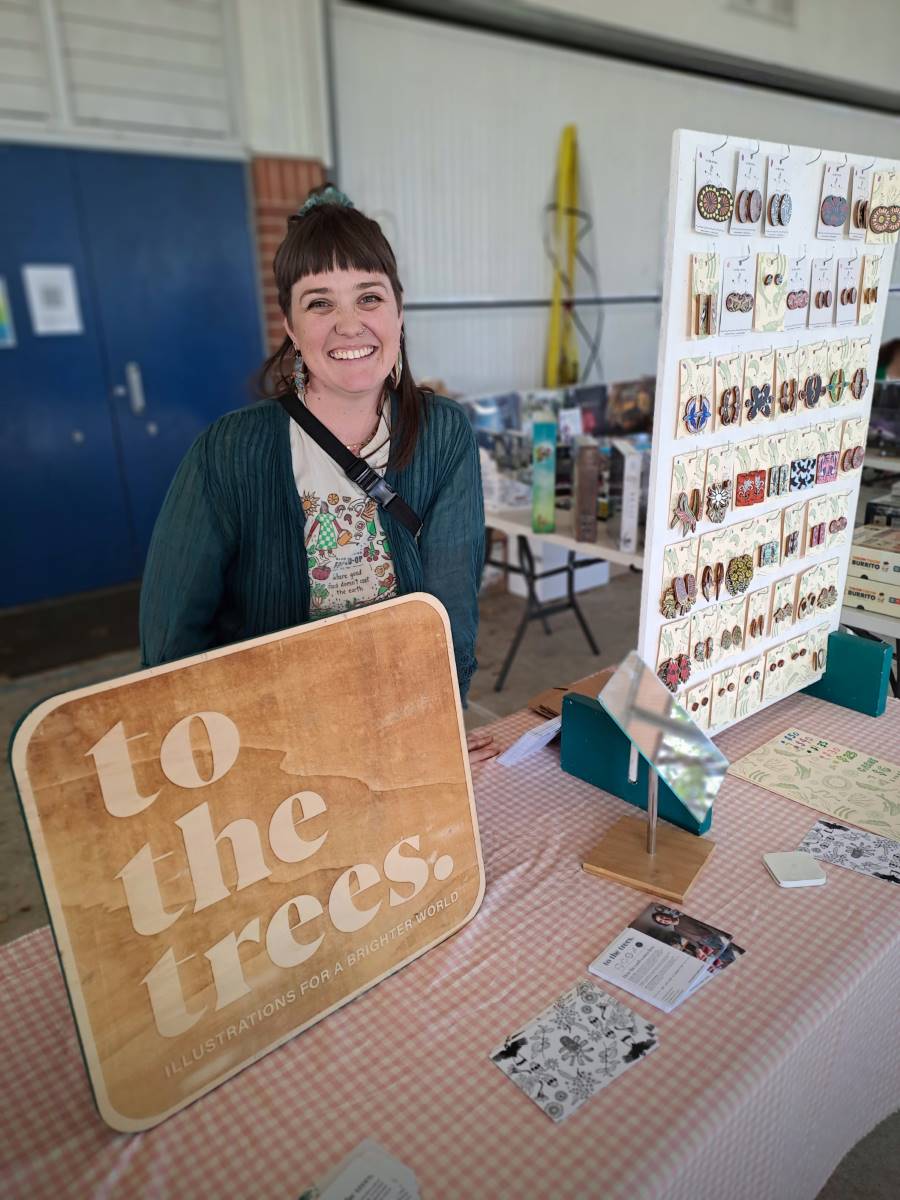
To The Trees artist Lauren Gero
Lauren Gero is a freelance illustrator selling wooden jewellery and greeting cards at the markets. The name of her business came from an early illustration that depicted a person walking away from a city with polluted waterways and towards the trees. The symbolism is apt for Lauren’s products, which depict animals and nature. She hopes her work will “encourage connecting with the earth, which builds love and then leads to the protection of the earth.”
Lauren also cited an oft-overlooked benefit of market shopping, being that shoppers come to form a more nuanced understanding of value. “A lot of people don’t understand the cost of things,” Lauren said. “For example, a dress from a big retailer might cost $5, whereas a dress from the markets might cost much more: it’s an opportunity to understand why. An opportunity to understand the effort that goes into making one little thing.”
Lithgow Valley Mushrooms
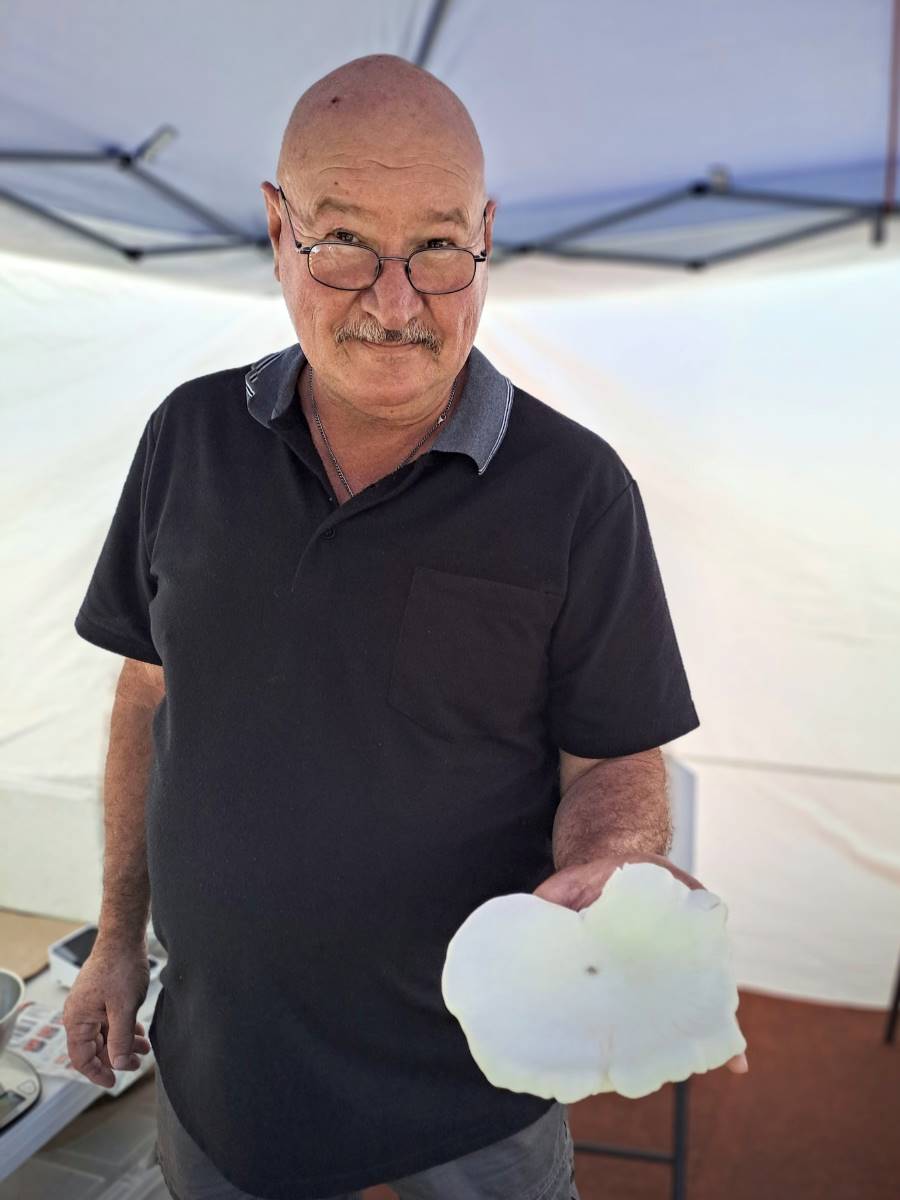
Steven McCulloch with a freshly picked oyster mushroom.
Growers like Steven McCulloch from Lithgow Valley Mushrooms take great pleasure in selling the best of their produce on market day: “If you buy at the markets, you’re going to get homegrown, organic, and the freshest produce from growers who care about the quality of the food,” he said. “You buy mushrooms from the shops, they’re in plastic trays that look like they’ve been sitting there for two weeks going slimy. We pick ours on the morning of the market.”
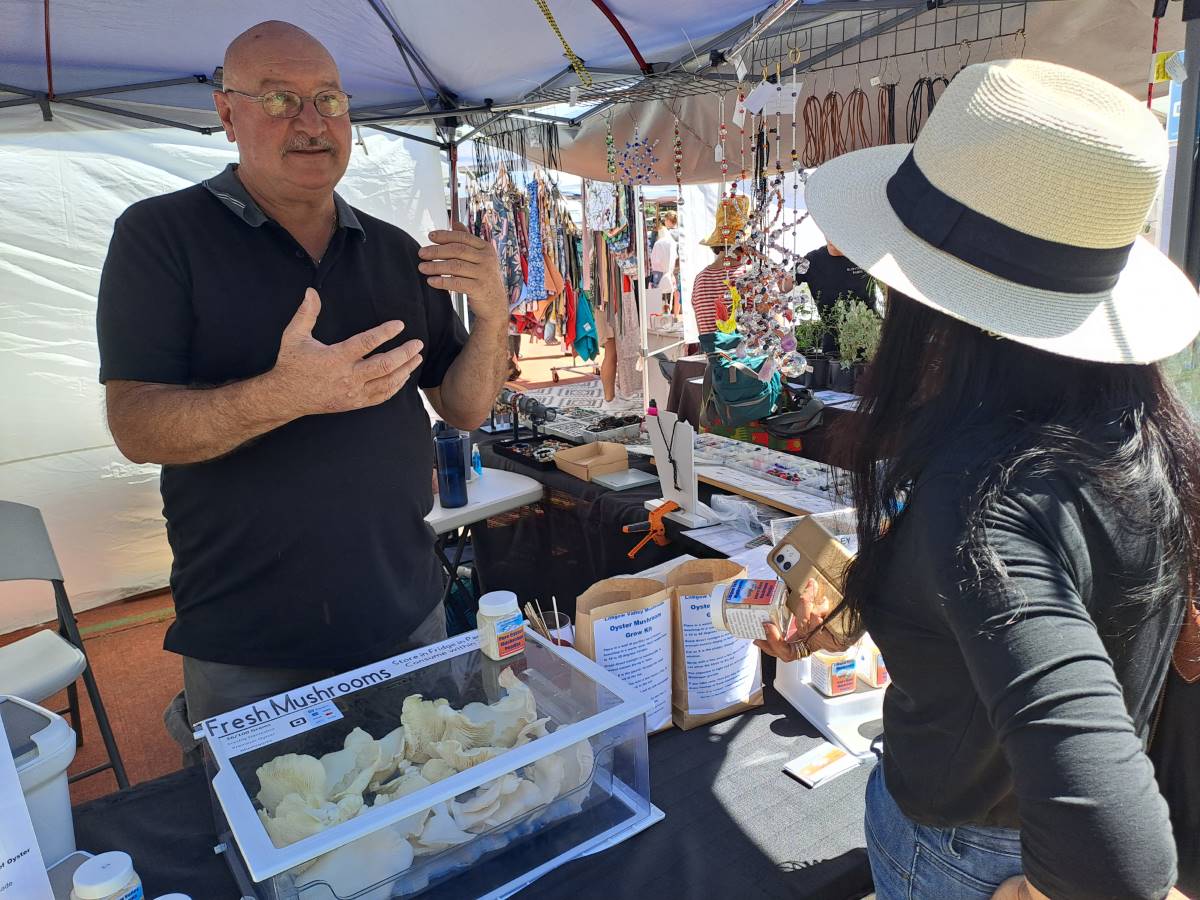
Steven explaining the many health benefits of his product.
Lithgow Valley Mushrooms is working hard to be as sustainable as possible, using the sawdust waste product from their local sawmill, then passing on their own waste product, mushroom compost, to nurseries and other growers. “We are trying to find a compostable plastic bag to grow in. If we did, then the whole cycle would be circular. We try not to waste anything. Whatever doesn’t sell gets turned into mushroom powder for cooking,” Steven added.
Uncle Ed’s FunCraft
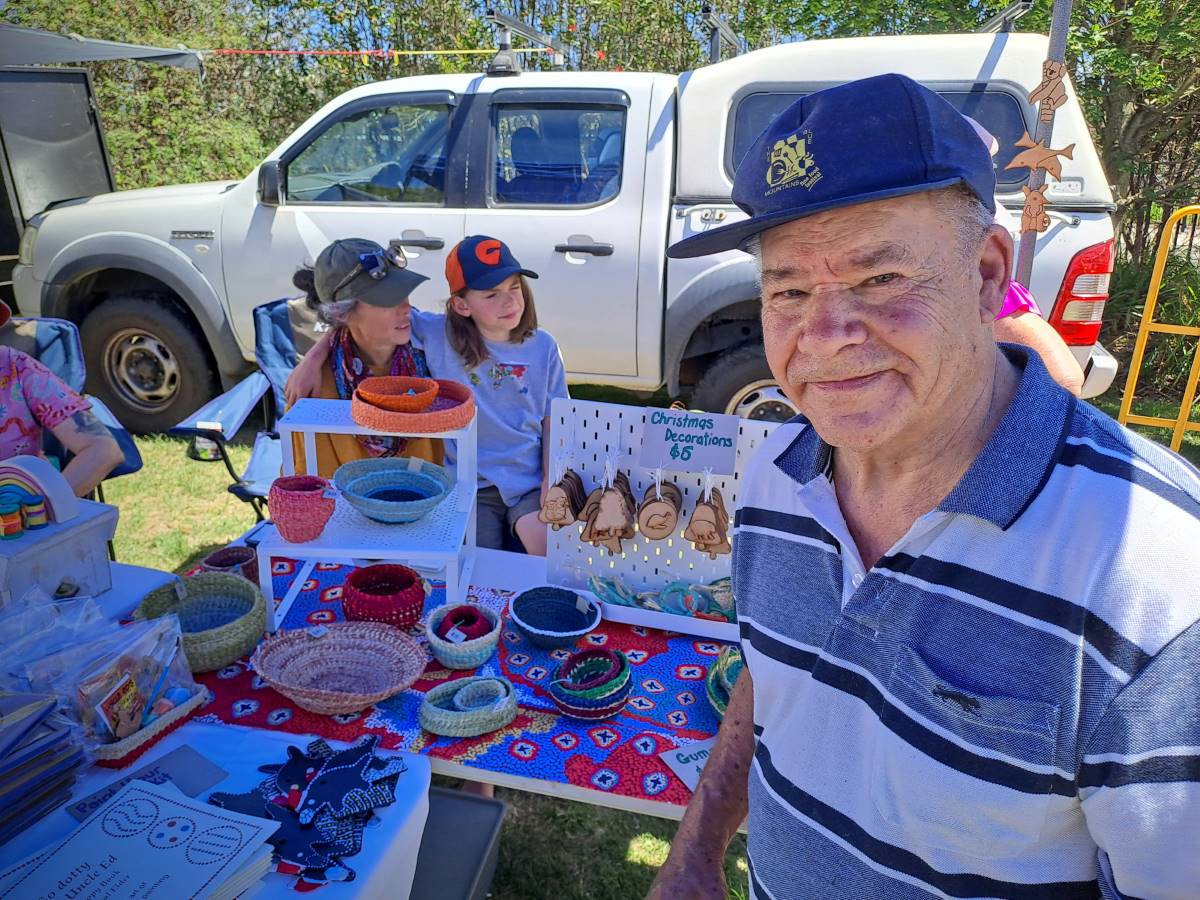
Uncle Ed at his stall which he shares with Kerin Pollock and her son James.
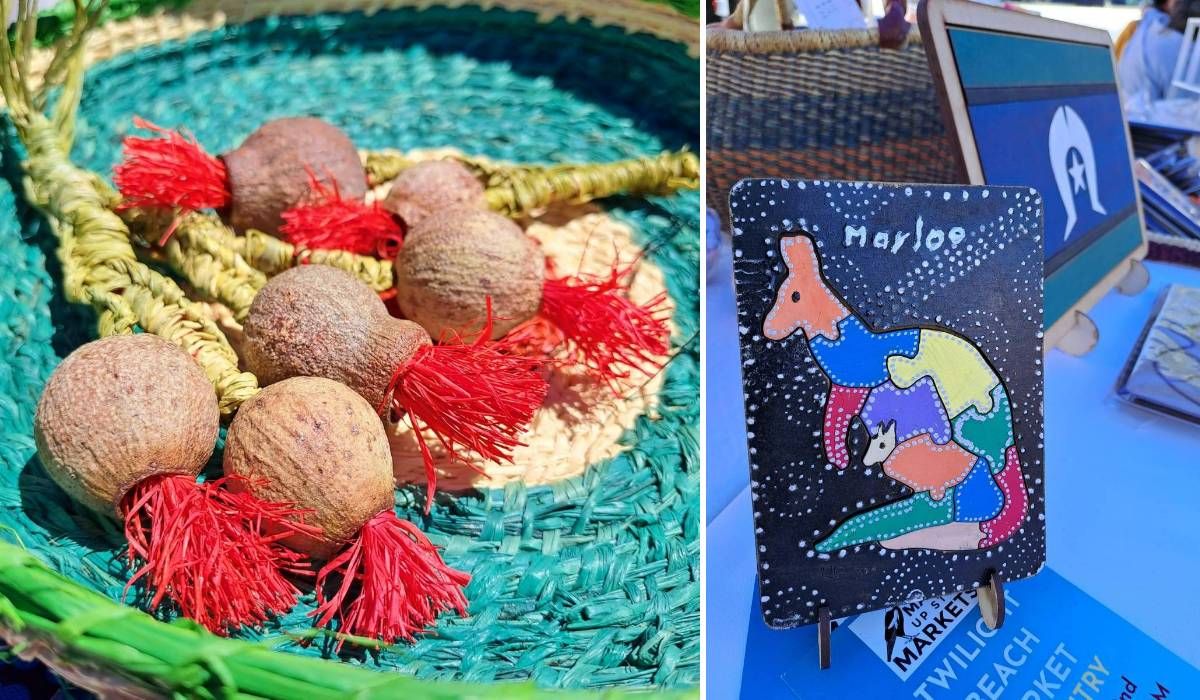
Uncle Ed is a carpenter by trade, but after a building accident in 1996, he had to cease work. He now saves large amounts of building waste from going to landfill by retrieving it from local builders and using it to make wooden decorations and activities for kids. “It’s very therapeutic,” he said. “It keeps my mind going, it keeps me active, and it keeps me creating.” While he used to cut all shapes out by hand, the onset of Parkinsons has meant that he has had to adapt. Keen not to let the condition stymie his creativity, he now uses a laser cutter.
Left: Kerin Pollock’s raffia craft. Right: Uncle Ed’s recycled wood toys and activities for kids.
A relatively new seller at the Markets, Uncle Ed’s business venture has been facilitated by friend Kerin Pollock who helped him prepare his work for markets. “More than anything Uncle Ed hopes his crafts are fun for kids,” she said. “There’s a big part of him that wants to create opportunities he never had as a child.” Now making her own raffia baskets that she sells alongside Uncle Ed’s craft, Kerin values the social connectedness of Market day: “Working with Uncle Ed and sharing stalls with friends helps me create the kind of community I want my son to grow up in.”
Bush Tucker Babies
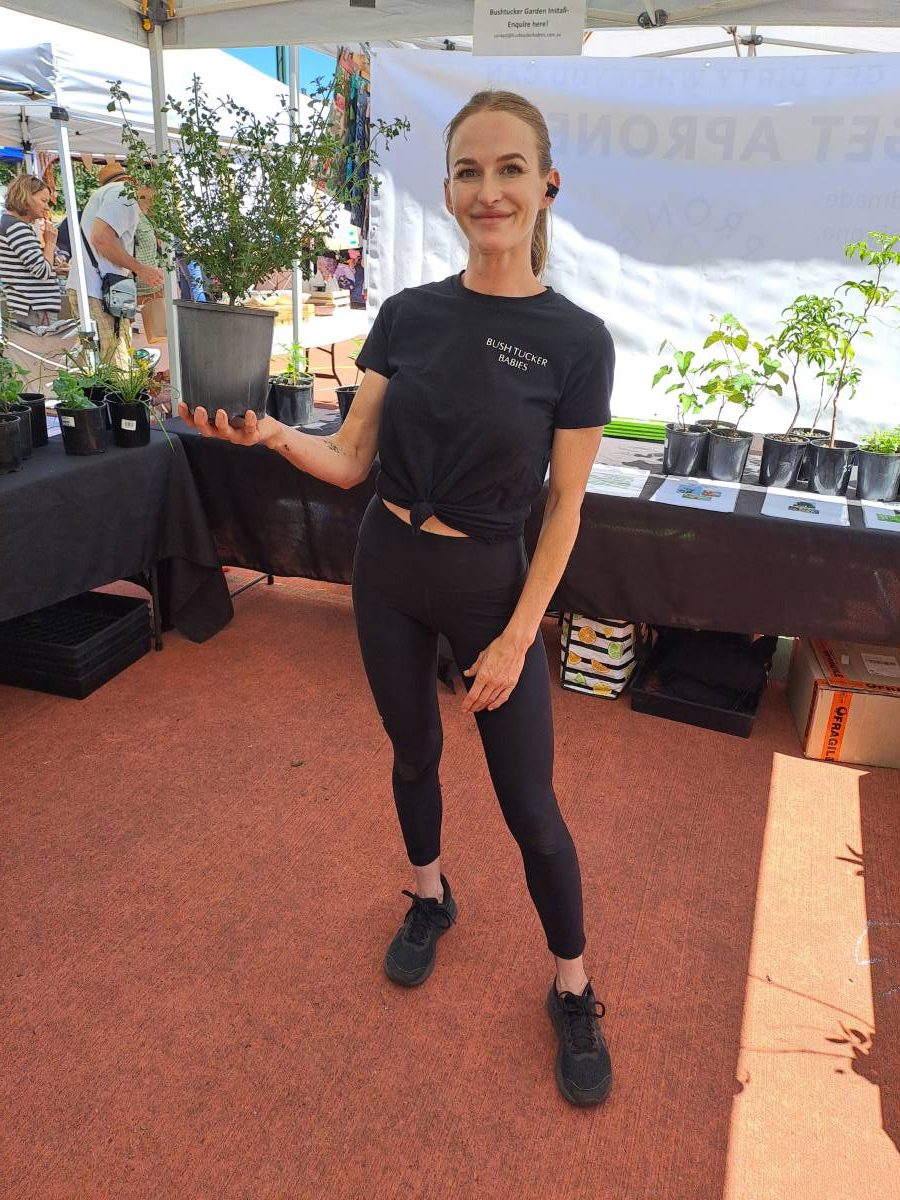
“We have always found that when we support local, local supports us too!” – Kippy from Bush Tucker Babies
Kippy and Jesse’s business started out of a desire to help raise awareness about the multitude of benefits of planting local natives and Australian natives more generally. They offer bush tucker and native garden installation, bush tucker education and retail of native plants, freeze-dried herbs and freeze-dried native fruits.
“We found that despite increasing awareness about the need to re-green our surrounding environment, the knowledge on how to do so is sadly lacking. Often readily available resources will recommend non-native plants that are better at supporting introduced honeybees and insects. This can negate the positive impact an individual can have, however good the original intentions were. With only around nine per cent of the original extent of the Cumberland Plain remaining, it’s never been more important to get local native plants into the ground and start supporting the environment and its habitats that existed and were cultivated by Original Custodians for thousands of years before Colonial settlement.”
Possum Loft
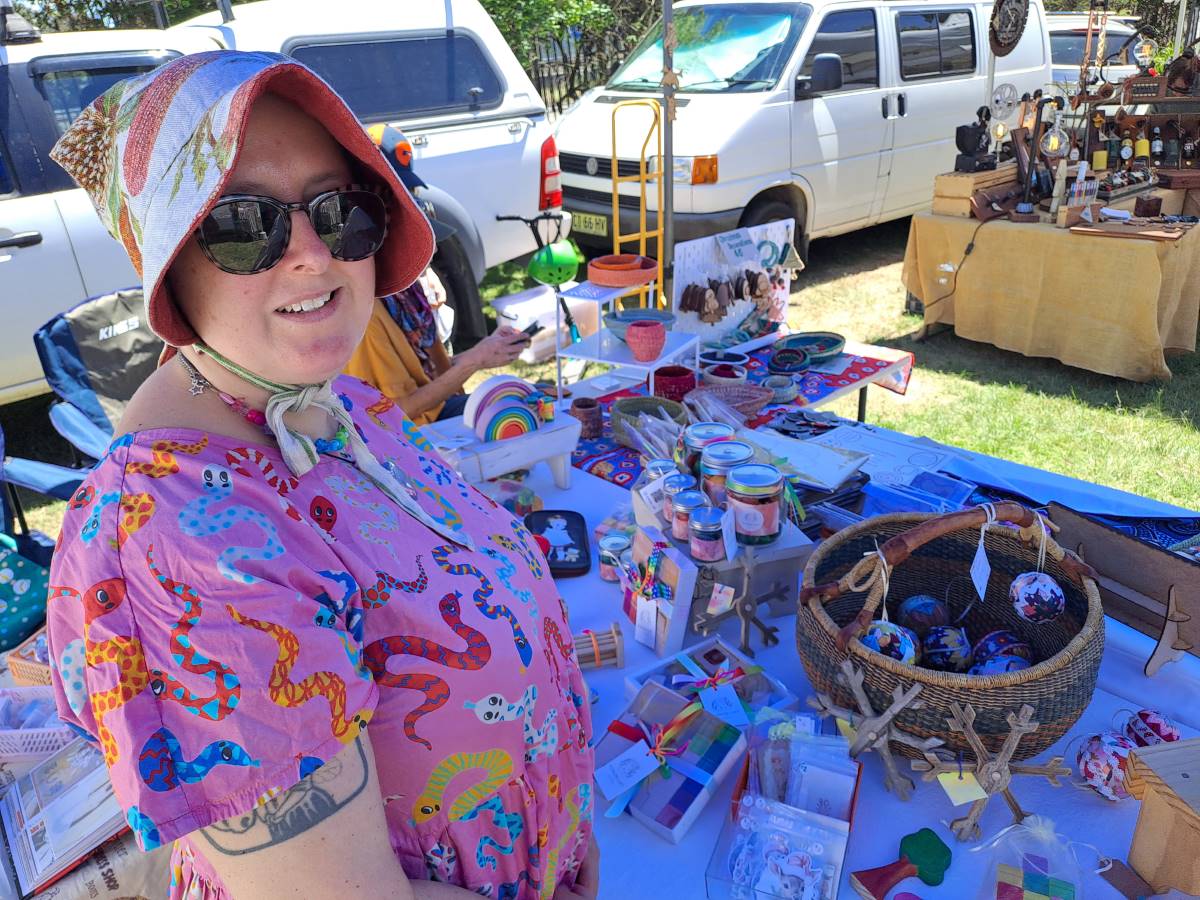
Louise from Possum Loft with her handmade goods.
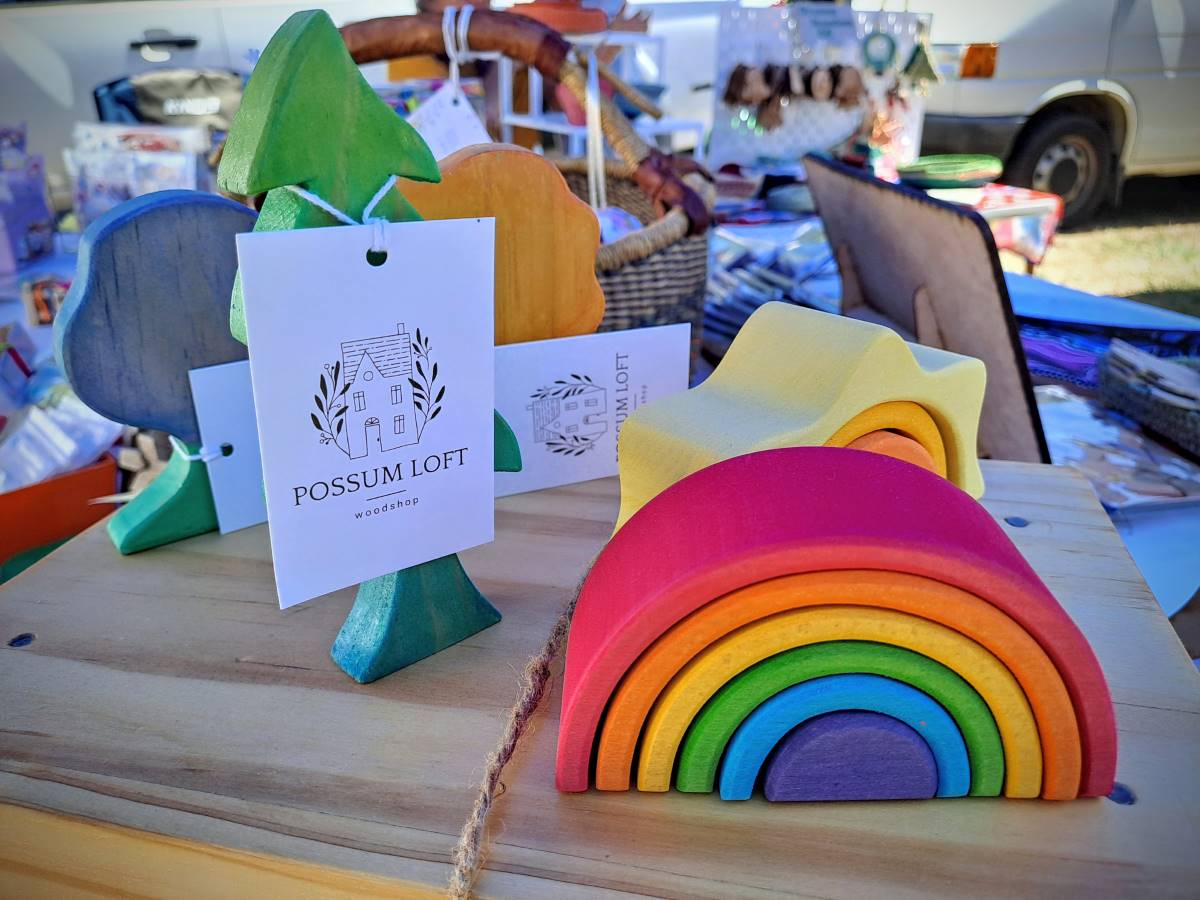
Lawsonites and regular stall holders at Magpie Markets, Louise and Ben, sell hand-crafted wooden toys and other fun creations. “We wanted to create affordable, recyclable, long-lasting, open-ended toys for our kids and the community,” Louise said. The pair particularly enjoy the social and historical aspect of selling at the local markets and believe that “getting involved with your community in any way is important because it’s so mutually beneficial and rewarding.”
Possum Loft’s hand-crafted wooden toys.
Whether for a dose of socialising, a tasty treat or to buy some home-grown, locally-made, or second-hand goods, Magpie Markets is the place to be on the third Sunday of every month. See you there!
Take Action:
Support local makers and growers by shopping at your local markets.
Consider selling your own goods at the local markets.
Visit Magpie Markets in Lawson on the third Sunday of the month.
This story has been produced as part of a Bioregional Collaboration for Planetary Health and is supported by the Disaster Risk Reduction Fund (DRRF). The DRRF is jointly funded by the Australian and New South Wales governments.
We had a thoroughly enjoyable final Skill Share Saturday for the year yesterday with Qigong, Fashion Upcycling, Seed Saving and Bushcare! We shared seeds from local gardens and harvested carrots, as well as Mizuna, Broad Bean, Daikon and Land Cress seeds from the Planetary Health garden. We then packaged up (and shared) our first Upper Mountains Seed Savers packs for our fledgling Seed Bank. In Bushcare it`s very exciting to see whole new areas of the Planetary Health Precinct open up as we remove invasive weeds. It`s been a year of great progress as we`ve restored habitat for wildlife and given local native plants the opportunity to flourish and re-establish on the site.
Join the Planetary Health Centre this Sat 6 Dec for the last Skill Share Saturday of the year: Qigong at 9am, Seed Saving & Gardening Group at 10am, and Bushcare at 1.30pm. One perfect day with great company, great coffee and food, and great steps for living a healthy balanced life, while also contributing to the health of our planet for present and future generations. All ages welcome!
Registration links in profile and below.
Register for Qigong here: https://bit.ly/48wlHjD Register for Seed Saving & Gardening here: https://bit.ly/4prcRe7 Register for Bushcare here: https://bit.ly/4oAFDrz
We have a rare opportunity to learn about the newest and best possible ways to support family and community members struggling with mental health issues, at a free talk and afternoon tea provided by Upper Blue Mountains Sunrise Rotary at the Planetary Health Centre at 2pm this Saturday 29 Nov. Hear from Peter Joseph AM, Chair of the Black Dog Institute, and Professor Helen Christensen AO, Fellow of the Australian Academy of Science and former Executive Director and Chief Scientist at the Black Dog Institute. They`ll be in conversation with journalist Emma Rossi. Dr Christensen is a pioneer in using the internet to reach young people struggling with depression. Her digital mental health interventions are used by millions globally, delivering evidence-based therapy for depression, anxiety, and suicide prevention. Her research uses data from smartphones and wearables – like movement, screen use, and sleep – to detect early signs of mental health issues. Bookings essential here (link in profile): https://bit.ly/4oOnYxz
This Saturday Sherlie McMillan from Rotarians 4 Planetary Health will be running a workshop on How to use a sewing machine from 9am at the Planetary Health Centre in Katoomba. Learn how to set up a machine, service it, troubleshoot when it`s not sewing correctly, and learn some basic sewing skills.
Bookings essential here (link in profile): https://events.humanitix.com/how-to-use-your-sewing-machine
NB. This class is a prerequisite for our very popular Fashion Upcycling classes held once a month.
We`re thrilled to announce that Professor Helen Christensen, a pioneer in using the internet to reach young people struggling with depression, will be joining the conversation with Peter Joseph AM from the Black Dog Institute and journalist Emma Rossi at the Planetary Health Centre at 2pm this Saturday 29 November. Helen was the Executive Director and Chief Scientist for the Black Dog Institute for 10 years and has now been elected a Fellow of the Australian Academy of Science. Her digital mental health interventions are used by millions globally, delivering evidence-based therapy for depression, anxiety, and suicide prevention. Her research uses data from smartphones and wearables – like movement, screen use, and sleep – to detect early signs of mental health issues. This free event is being co-hosted by Upper Blue Mountains Sunrise Rotary and the Blue Mountains Planetary Health Initiative. Afternoon tea will be provided. Bookings essential here (link in profile): https://bit.ly/4oOnYxz
Human composting is increasingly being legalised around the world. Read about it in Katoomba Area Local News here (link in profile): https://www.katoombalocalnews.com/legalising-human-composting/
If you’d like to see this option available in NSW you can now sign a live petition to the NSW Parliament here (link in profile): https://bit.ly/43QIHbz
Thanks to everyone who contributed to deliver a fantastic Disaster Risk Awareness Expo and Family Day yesterday. @mark_greenhill_mayor opened the event at which we celebrated the 13th birthday of Betty the Asbestos Education House; @firecoat_au demonstrated and launched its range of fire retardant products that can help protect homes, gardens and even electricity poles; the Bushfire Retrofit Toolkit was launched; Santa arrived and delighted young and old; and @plantinspired99 and Action for Animals fed us all with a delicious plant-based sausage sizzle. The day was filled with talks, workshops, stalls and the sharing of a huge amount of expertise to keep us, and the other species we share our planet with, safe and healthy! @southkatoomba.rfb @nswses @fireandrescuensw @nswrfs @redcrossleura @redcrossau @shelter.building.design @firehalo.au @asbestosawareness @amelie_ecology @bbagsbluemtns @wireswildliferescue @handsheartfeet
Our marquee is up and we`re excited about our Expo and Family Day tomorrow (Sat 22 Nov). There`s something for everyone from a free sausage sizzle, plants from Santa and drumming and pollinator workshops, to sessions on keeping you and our community safe from extreme weather events and hazardous substances like mould and asbestos. Learn how intumescent paints can slow the spread of fire and pick up a sample pot; check out all our emergency service organisations; learn how to dispose of hazardous materials; paint a native orchid, make some seed balls or sew a boomerang bag to give as plastic-free Christmas presents this year; enjoy coffee and locally made sweets; and get tips on how to retrofit your home safely and beautifully to be prepared for future extreme weather events. View the full program and register here (link in profile): https://bit.ly/4nFrY1J
There are so many new and innovative ways of doing things, like the new cooking techniques being explored by Michael from Good Fat Pastry, and the new fire protection methods being launched at the Planetary Health Centre`s Expo and Family Day on Sat 22 Nov. Check out Michael’s recent presentation at the Food Security Fair in our video here: https://bit.ly/4pnXbIg (link in profile) and come along to taste his delicious carrot cake and pastries at the Expo on Saturday. Check out the program and register to attend here (link in profile): https://bit.ly/4nFrY1J
In 2006 Peter Joseph’s son Michael suicided after a 14-year episodic battle with mental illness. Peter is now the Chair of the Black Dog Institute which is working to achieve better outcomes for all those struggling with mental health issues. Journalist Emma Rossi will engage Peter in an intimate and moving conversation about a life of purpose and mental health advocacy. As a Rotary scholar Peter will also reflect on how Rotary helped shape his values and sense of purpose as a young man - and how those early lessons continue to guide his work today. This free event is being hosted by the Upper Blue Mountains Sunrise Rotary Club and the Blue Mountains Planetary Health Initiative on Saturday 29 November from 2-4pm at the Planetary Health Centre at 33-39 Acacia St Katoomba. Afternoon tea will be provided. Bookings essential here (link in profile): https://bit.ly/4oOnYxz
Learn about intumescent fire retardant paint and a range of other strategies to prepare for extreme weather events, and to manage hazardous materials, at the upcoming Expo and Family Day at the Planetary Health Centre on Sat 22 Nov. You can register to attend here (link in profile): https://bit.ly/4nFrY1J We checked out how intumescent paint works in this video.
When temperatures reach a certain point the intumescent paint begins to swell and expand, often up to 50 times its original thickness. It forms a thick, carbonaceous "char" that acts as an insulating barrier. This layer slows the rate at which heat reaches the structural elements and buys valuable time for people to safely exit a building during a fire. It makes the structure safer for firefighters and rescue teams. #intumescentpaint #fireretardant #bushfire @firecoat_au...
Mould, lead paint, asbestos, silica dust from engineered stone bench tops and a wide range of chemicals, are amongst some of the many hazardous substances entering our environment and negatively impacting our health. Asbestos is found in over 3000 products including textured paints, moulded garden pots, brake pads and clutch linings in older cars, floor and ceiling tiles, lino, fibro, roofing, pipes and gutters, hot water systems, backing for switchboards and insulation boards in air-conditioning ducts, insulation, sealants, fillers, caulking and adhesives, gaskets for industrial and lab equipment and more. We’ll have information to take away and Blue Mountains City Council and the Asbestos and Hazardous Materials Consultants Association (AHCA) will be running free workshops on how to identify and manage these hazardous substances at the Planetary Health Centre`s Disaster Risk Awareness Expo in Katoomba on Sat 22 Nov. Find out more and register to attend here (link in profile): https://bit.ly/4nFrY1J
Belle Butler is a writer, musician and occasional photographer. She likes mix-and-matching these artforms and often explores the same themes through each of them. Her short fiction has been published in numerous Australian literary journals and she recently received a WestWords Fellowship and Mentorship with Delia Falconer for her novel manuscript, ‘River.’ Hopefully it will be published one day.
When Dan Gaffney found out he was having a son, it prompted action to break a cycle of inter-generational disconnection. What began as a personal commitment to self-work has since grown into a powerful communal practice helping men become more emotionally literate, accountable, conscious and connected.
Enjoyed this article? Please help spread the word :)
Support the Future of Solutions-Focused Neighbourhood News