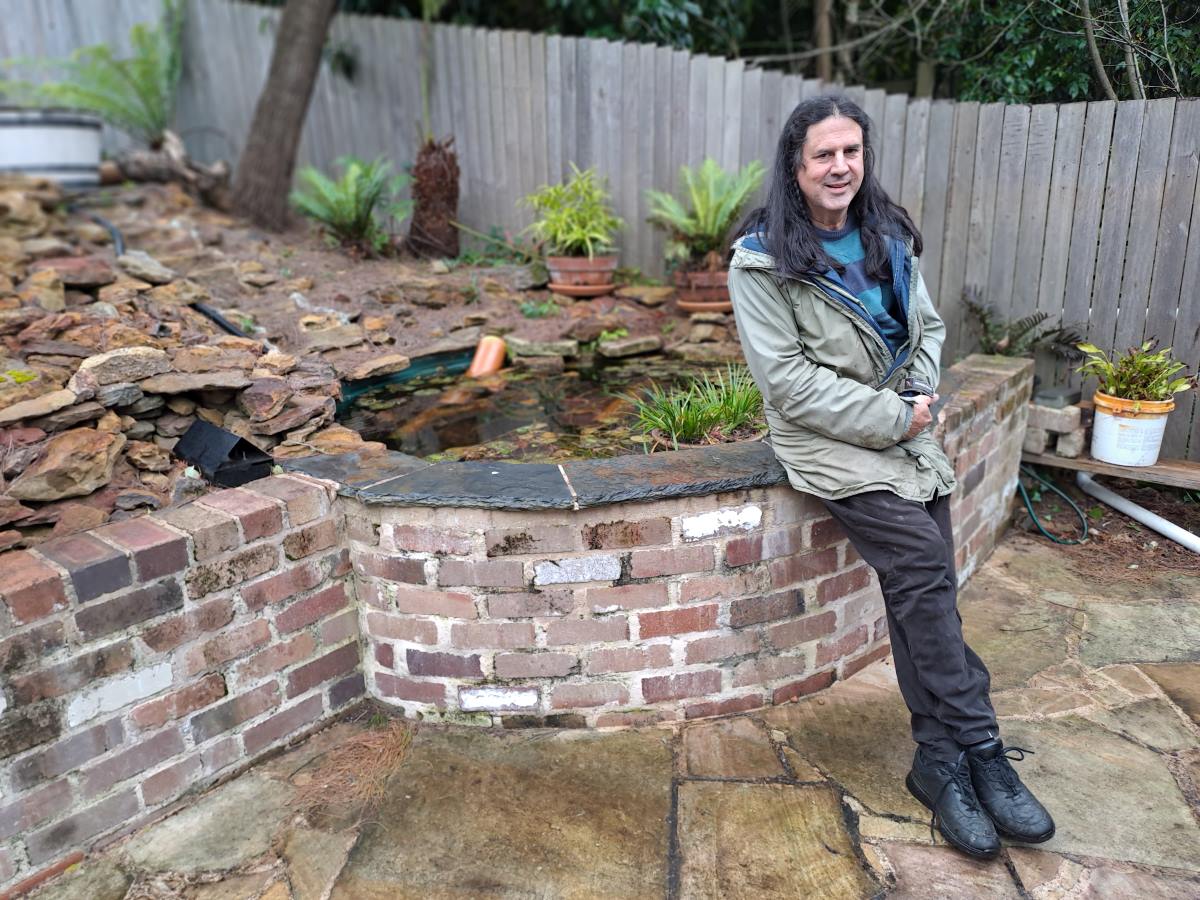
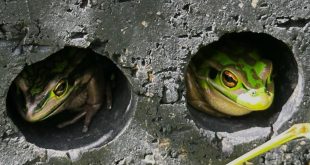
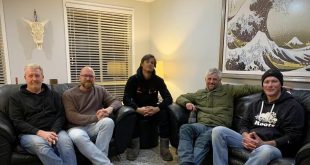
Ian Tanner, founder of Ecological Funding Group, at his backyard pond.
Story by Belle Butler
In response to the global biodiversity crisis, which has seen around 69% of wildlife populations decline in 50 years, Lawson resident Ian Tanner has established an Ecological Funding Group which is raising funds to provide focussed donations to the Environmental Defenders Office and The Nature Conservancy.
Key Points:
Biodiversity is critical for sustaining life on the planet. The greater the diversity of our ecosystems, the greater our resilience.
Contributing 1% of GDP could help reverse the biodiversity crisis.
One main focus of the Ecological Funding Group is hosting tours into the bush in order to encourage people to become more deeply involved with the natural world.
There’s nothing quite like a near-death experience to jolt you into action (or to start a story!). Lawson resident Ian Tanner was having some late-night fried rice when a mouthful became lodged in his airway. He couldn’t breathe or utter a sound to wake anyone in the house. As he tried to stay calm, he found himself staring at the dirt on the floor:
“I remember thinking, this is the last thing I’m going to see, and how pointless is that. I’ll be remembered as someone who indulged and travelled a lot. I realised my whole life had been indulgences.” – Ian Tanner
This mid-choke thought evolved into a big-picture insight: “I could sort of see all of time as a block. Like an iron block that was bigger than you could ever imagine, and that was unconscious matter, the way most things are. But we are conscious, we’re alive, we live. And we live through each other, through the biosphere, through the biological processes that we have, eating, breathing and everything biological. It’s not about the buildings and the concrete, it’s about life and the beautiful forms that it takes.”
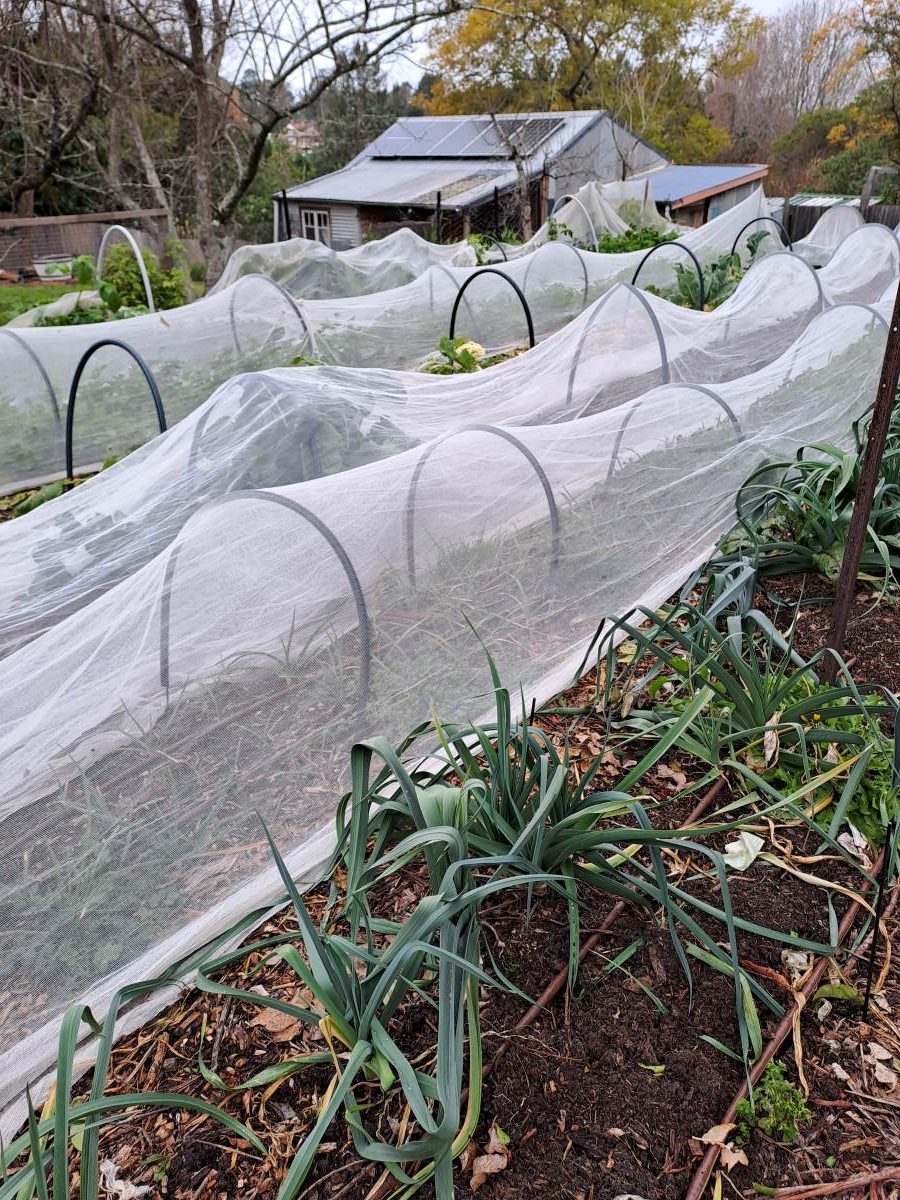
Ian was eventually able to dislodge the food, but the incident left a lasting impression. He felt an acute need to act in the best interests of the planet. Ian changed his lifestyle, personally donating to wildlife conservation and land conservancy groups, investing in solar panels and an EV (the resultant savings of which he also donates), and repurposing the flat ‘football pitch’ of his backyard by turning it into a Farm It Forward food growing plot. Thinking bigger, in 2019 he created the Ecological Funding Group, which raises money to donate to professional action groups working to stop biodiversity loss and to repair ecology.
Ian’s family has a Farm It Forward growing plot in their backyard.
Biodiversity is critical
Biodiversity is critical for sustaining life on the planet. Among many other benefits, diverse ecosystems provide sustenance, shelter, medicine and other resources; they regulate climate, control disease, support nutrient cycles and pollination; and they provide places for respite and recreation. It is estimated that about half of Australia’s economy relies on these systems. The greater the diversity of our ecosystems, the greater our resilience.
Over the last 50 years there has been about a 69% decline in wildlife populations. When we lose one part of the system, we weaken the system itself. Most biodiversity loss has been a result of human activity, while human-induced climate change is predicted to become the biggest threat to biodiversity in the coming decades. In a chicken and egg kind of scenario, maintaining and restoring biodiversity will help slow and mitigate the effects of climate change.
“Not nearly enough money is going into biodiversity,” Ian said, citing an article from The Nature Conservancy that stresses the need for a shift in how we value and invest in nature. “It’s the poor cousin of climate change, but the climate crisis will be the collapse of ecology. To stop the biodiversity crisis we need to put 1% of GDP in. So I thought, ‘the governments aren’t doing enough, so I’m just going to do more.’”
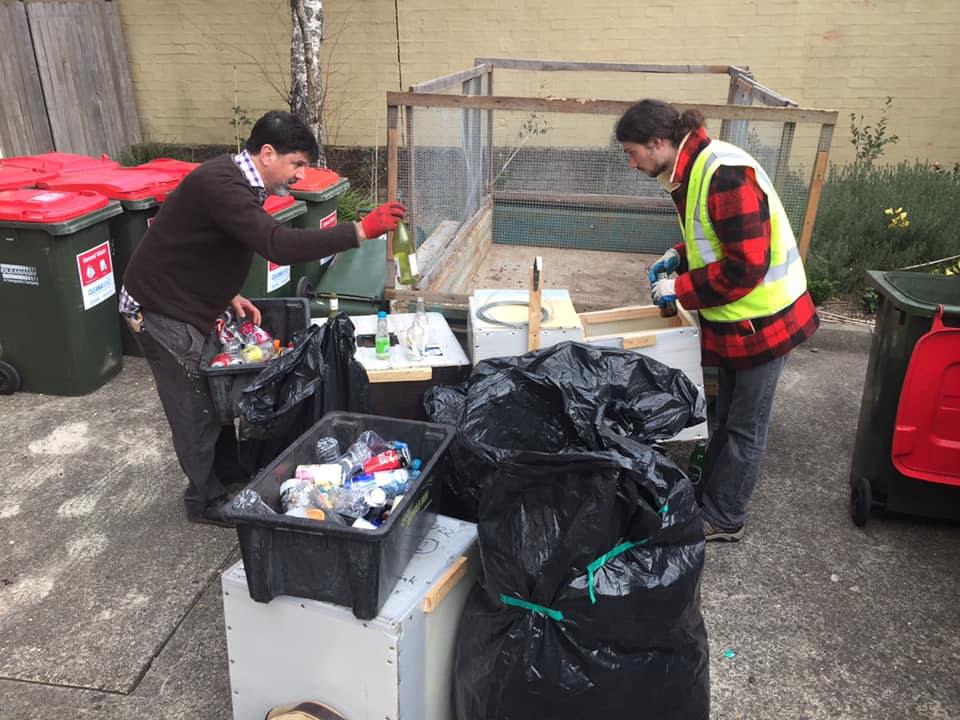
Ian does this via his Ecological Funding Group, which raises money in a variety of ways. The Group accepts individual contributions, hosts fundraising events such as music gigs and bird watching tours, and collects recyclable containers in collaboration with Katoomba High School and from events such as this year’s Winter Magic Festival to deposit for cash refunds. All money coming in goes out, with focussed donations going to the Environmental Defenders Office and The Nature Conservancy.
Ian and his son Will sorting out containers from the Winter Magic Festival 2019. (supplied)
Containers collected from this year’s Winter Magic.
Ian credits his core bond with nature to a ‘trip out bush’ he took with a friend when he was 19. “And that connection is really important, because you don’t care about it if you’re not connected to it,” he said. For this reason, one main focus of the Group is hosting tours into the bush in order to encourage people to become more deeply involved with the natural world. “The bird watching trip was so effective because it was a fundraiser and participants got that connection with nature. So, they’re giving money towards nature and making that connection with it: they can see the whole thing in motion.”
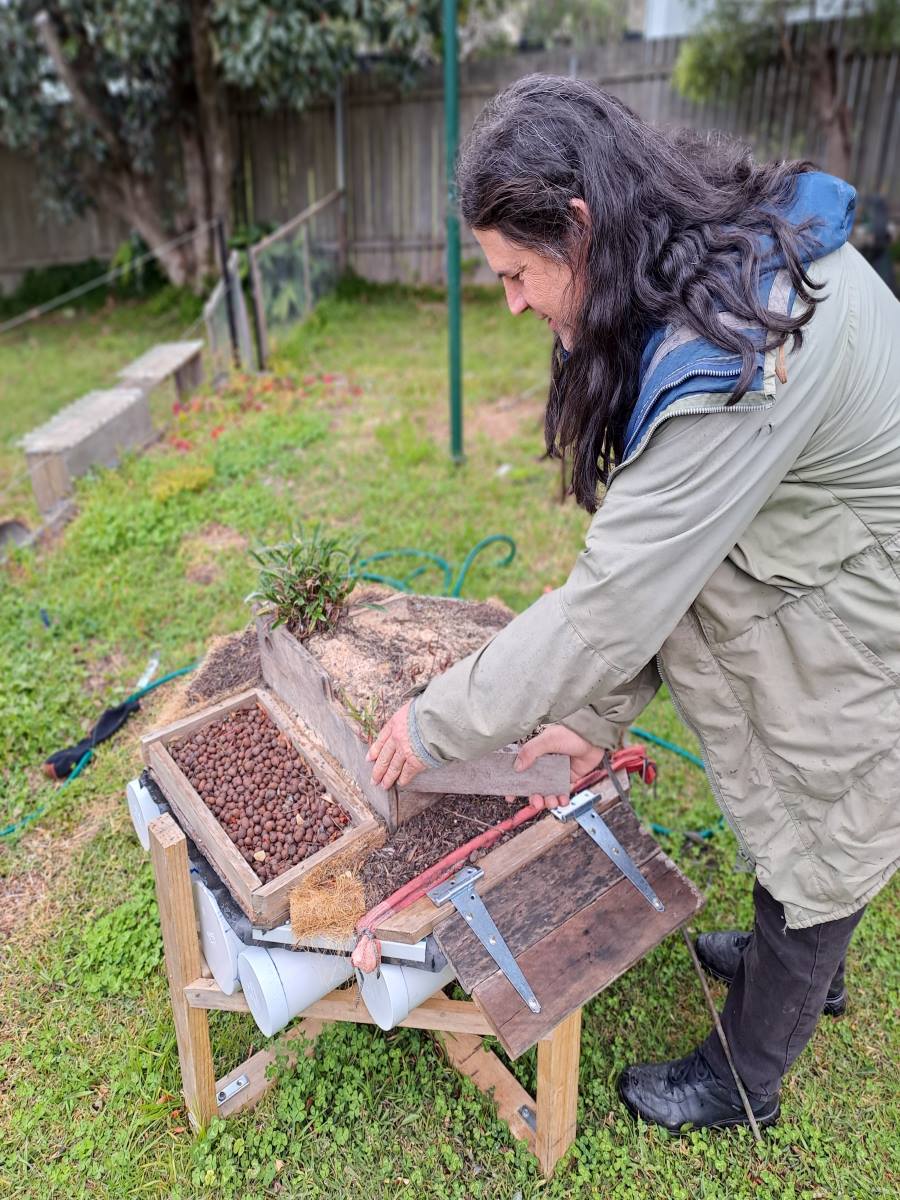
The Group is also currently working on a prototype for turtle islands as a public sculpture, with the potential to later sell.
Ian with an early-stage prototype of a turtle island.
Ian sees reconnecting us with our environment as a key aspect of convincing human populations to adequately fund the reversal of the biodiversity crisis. “We all rely on the biosphere, but because of our power we are isolated from nature. Whole ecosystems might be lost and people wouldn’t immediately notice it, even though it will affect them later. It takes imagination and altruism towards future generations to see that.”
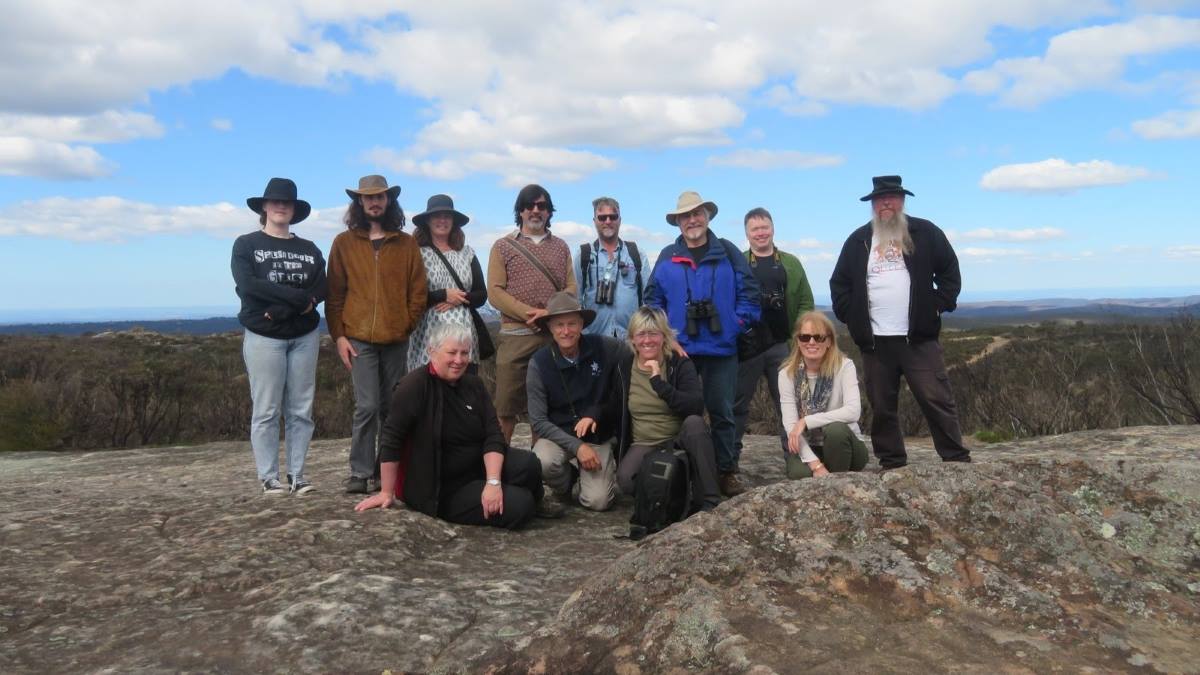
The first bird-watching tour coordinated by Ecological Funding Group and hosted by bird enthusiast Dion Hobcroft. (supplied)
Moving forward, Ian would like the Ecological Funding Group to expand and host more nature tours, events and fundraising opportunities. “I see it as a real opportunity to bring people together, and I want it to be dynamic and growing.”
He encourages anyone who wishes to be involved to get in touch, and he hopes that everyone finds a way to contribute that 1% required to turn the biodiversity crisis around. “Our time is so short compared to this hugeness of time,” he said. “We as conscious individuals must do something. We all owe it, this is the debt we owe to the biosphere. And even a small amount makes you feel good about yourself.”
This story has been produced as part of a Bioregional Collaboration for Planetary Health and is supported by the Disaster Risk Reduction Fund (DRRF). The DRRF is jointly funded by the Australian and New South Wales governments.
We had a thoroughly enjoyable final Skill Share Saturday for the year yesterday with Qigong, Fashion Upcycling, Seed Saving and Bushcare! We shared seeds from local gardens and harvested carrots, as well as Mizuna, Broad Bean, Daikon and Land Cress seeds from the Planetary Health garden. We then packaged up (and shared) our first Upper Mountains Seed Savers packs for our fledgling Seed Bank. In Bushcare it`s very exciting to see whole new areas of the Planetary Health Precinct open up as we remove invasive weeds. It`s been a year of great progress as we`ve restored habitat for wildlife and given local native plants the opportunity to flourish and re-establish on the site.
Join the Planetary Health Centre this Sat 6 Dec for the last Skill Share Saturday of the year: Qigong at 9am, Seed Saving & Gardening Group at 10am, and Bushcare at 1.30pm. One perfect day with great company, great coffee and food, and great steps for living a healthy balanced life, while also contributing to the health of our planet for present and future generations. All ages welcome!
Registration links in profile and below.
Register for Qigong here: https://bit.ly/48wlHjD Register for Seed Saving & Gardening here: https://bit.ly/4prcRe7 Register for Bushcare here: https://bit.ly/4oAFDrz
We have a rare opportunity to learn about the newest and best possible ways to support family and community members struggling with mental health issues, at a free talk and afternoon tea provided by Upper Blue Mountains Sunrise Rotary at the Planetary Health Centre at 2pm this Saturday 29 Nov. Hear from Peter Joseph AM, Chair of the Black Dog Institute, and Professor Helen Christensen AO, Fellow of the Australian Academy of Science and former Executive Director and Chief Scientist at the Black Dog Institute. They`ll be in conversation with journalist Emma Rossi. Dr Christensen is a pioneer in using the internet to reach young people struggling with depression. Her digital mental health interventions are used by millions globally, delivering evidence-based therapy for depression, anxiety, and suicide prevention. Her research uses data from smartphones and wearables – like movement, screen use, and sleep – to detect early signs of mental health issues. Bookings essential here (link in profile): https://bit.ly/4oOnYxz
This Saturday Sherlie McMillan from Rotarians 4 Planetary Health will be running a workshop on How to use a sewing machine from 9am at the Planetary Health Centre in Katoomba. Learn how to set up a machine, service it, troubleshoot when it`s not sewing correctly, and learn some basic sewing skills.
Bookings essential here (link in profile): https://events.humanitix.com/how-to-use-your-sewing-machine
NB. This class is a prerequisite for our very popular Fashion Upcycling classes held once a month.
We`re thrilled to announce that Professor Helen Christensen, a pioneer in using the internet to reach young people struggling with depression, will be joining the conversation with Peter Joseph AM from the Black Dog Institute and journalist Emma Rossi at the Planetary Health Centre at 2pm this Saturday 29 November. Helen was the Executive Director and Chief Scientist for the Black Dog Institute for 10 years and has now been elected a Fellow of the Australian Academy of Science. Her digital mental health interventions are used by millions globally, delivering evidence-based therapy for depression, anxiety, and suicide prevention. Her research uses data from smartphones and wearables – like movement, screen use, and sleep – to detect early signs of mental health issues. This free event is being co-hosted by Upper Blue Mountains Sunrise Rotary and the Blue Mountains Planetary Health Initiative. Afternoon tea will be provided. Bookings essential here (link in profile): https://bit.ly/4oOnYxz
Human composting is increasingly being legalised around the world. Read about it in Katoomba Area Local News here (link in profile): https://www.katoombalocalnews.com/legalising-human-composting/
If you’d like to see this option available in NSW you can now sign a live petition to the NSW Parliament here (link in profile): https://bit.ly/43QIHbz
Thanks to everyone who contributed to deliver a fantastic Disaster Risk Awareness Expo and Family Day yesterday. @mark_greenhill_mayor opened the event at which we celebrated the 13th birthday of Betty the Asbestos Education House; @firecoat_au demonstrated and launched its range of fire retardant products that can help protect homes, gardens and even electricity poles; the Bushfire Retrofit Toolkit was launched; Santa arrived and delighted young and old; and @plantinspired99 and Action for Animals fed us all with a delicious plant-based sausage sizzle. The day was filled with talks, workshops, stalls and the sharing of a huge amount of expertise to keep us, and the other species we share our planet with, safe and healthy! @southkatoomba.rfb @nswses @fireandrescuensw @nswrfs @redcrossleura @redcrossau @shelter.building.design @firehalo.au @asbestosawareness @amelie_ecology @bbagsbluemtns @wireswildliferescue @handsheartfeet
Our marquee is up and we`re excited about our Expo and Family Day tomorrow (Sat 22 Nov). There`s something for everyone from a free sausage sizzle, plants from Santa and drumming and pollinator workshops, to sessions on keeping you and our community safe from extreme weather events and hazardous substances like mould and asbestos. Learn how intumescent paints can slow the spread of fire and pick up a sample pot; check out all our emergency service organisations; learn how to dispose of hazardous materials; paint a native orchid, make some seed balls or sew a boomerang bag to give as plastic-free Christmas presents this year; enjoy coffee and locally made sweets; and get tips on how to retrofit your home safely and beautifully to be prepared for future extreme weather events. View the full program and register here (link in profile): https://bit.ly/4nFrY1J
There are so many new and innovative ways of doing things, like the new cooking techniques being explored by Michael from Good Fat Pastry, and the new fire protection methods being launched at the Planetary Health Centre`s Expo and Family Day on Sat 22 Nov. Check out Michael’s recent presentation at the Food Security Fair in our video here: https://bit.ly/4pnXbIg (link in profile) and come along to taste his delicious carrot cake and pastries at the Expo on Saturday. Check out the program and register to attend here (link in profile): https://bit.ly/4nFrY1J
In 2006 Peter Joseph’s son Michael suicided after a 14-year episodic battle with mental illness. Peter is now the Chair of the Black Dog Institute which is working to achieve better outcomes for all those struggling with mental health issues. Journalist Emma Rossi will engage Peter in an intimate and moving conversation about a life of purpose and mental health advocacy. As a Rotary scholar Peter will also reflect on how Rotary helped shape his values and sense of purpose as a young man - and how those early lessons continue to guide his work today. This free event is being hosted by the Upper Blue Mountains Sunrise Rotary Club and the Blue Mountains Planetary Health Initiative on Saturday 29 November from 2-4pm at the Planetary Health Centre at 33-39 Acacia St Katoomba. Afternoon tea will be provided. Bookings essential here (link in profile): https://bit.ly/4oOnYxz
Learn about intumescent fire retardant paint and a range of other strategies to prepare for extreme weather events, and to manage hazardous materials, at the upcoming Expo and Family Day at the Planetary Health Centre on Sat 22 Nov. You can register to attend here (link in profile): https://bit.ly/4nFrY1J We checked out how intumescent paint works in this video.
When temperatures reach a certain point the intumescent paint begins to swell and expand, often up to 50 times its original thickness. It forms a thick, carbonaceous "char" that acts as an insulating barrier. This layer slows the rate at which heat reaches the structural elements and buys valuable time for people to safely exit a building during a fire. It makes the structure safer for firefighters and rescue teams. #intumescentpaint #fireretardant #bushfire @firecoat_au...
Mould, lead paint, asbestos, silica dust from engineered stone bench tops and a wide range of chemicals, are amongst some of the many hazardous substances entering our environment and negatively impacting our health. Asbestos is found in over 3000 products including textured paints, moulded garden pots, brake pads and clutch linings in older cars, floor and ceiling tiles, lino, fibro, roofing, pipes and gutters, hot water systems, backing for switchboards and insulation boards in air-conditioning ducts, insulation, sealants, fillers, caulking and adhesives, gaskets for industrial and lab equipment and more. We’ll have information to take away and Blue Mountains City Council and the Asbestos and Hazardous Materials Consultants Association (AHCA) will be running free workshops on how to identify and manage these hazardous substances at the Planetary Health Centre`s Disaster Risk Awareness Expo in Katoomba on Sat 22 Nov. Find out more and register to attend here (link in profile): https://bit.ly/4nFrY1J
Belle Butler is a writer, musician and occasional photographer. She likes mix-and-matching these artforms and often explores the same themes through each of them. Her short fiction has been published in numerous Australian literary journals and she recently received a WestWords Fellowship and Mentorship with Delia Falconer for her novel manuscript, ‘River.’ Hopefully it will be published one day.
When Dan Gaffney found out he was having a son, it prompted action to break a cycle of inter-generational disconnection. What began as a personal commitment to self-work has since grown into a powerful communal practice helping men become more emotionally literate, accountable, conscious and connected.
Enjoyed this article? Please help spread the word :)
Support the Future of Solutions-Focused Neighbourhood News