Marilyn Pride at her mudbrick green roof home in Linden
Story and photos by Belle Butler
A green roof, with soil and a vegetation layer, reduces energy use, boosts biodiversity and reduces bushfire risk. Read about a home in Linden where the owners have enjoyed the benefits of their green roof for over 30 years.
Key Points:
A house with a green roof doesn’t take land space away from nature
Green roofs reduce heating, cooling, fire risks, pollution and stormwater runoff
Biodiversity increases with green roofs.
Taking a bird’s eye view of Marilyn Pride and Lewis Morley’s home in Linden, you might wonder if you are looking down at a house at all. The usual hard surfaces of rooftop and edge are nowhere to be seen. Instead, there are the undulating, soft and blended curves of grass, flower and earth. Here, the stark contrast of development upon nature is avoided by integrating nature into development, in the form of a green roof.
Marilyn and Lewis built their mudbrick home in 1992. They originally wanted a thatched roof, but that being an impossibility due to fire risk, they discovered the benefits of topping their home with soil and vegetation instead.
“A green roof doesn’t take away from the footprint of the land. It’s still got plenty of greenery and foraging plants for the bees up there, so it’s keeping the same land space for growing.” – Marilyn Pride
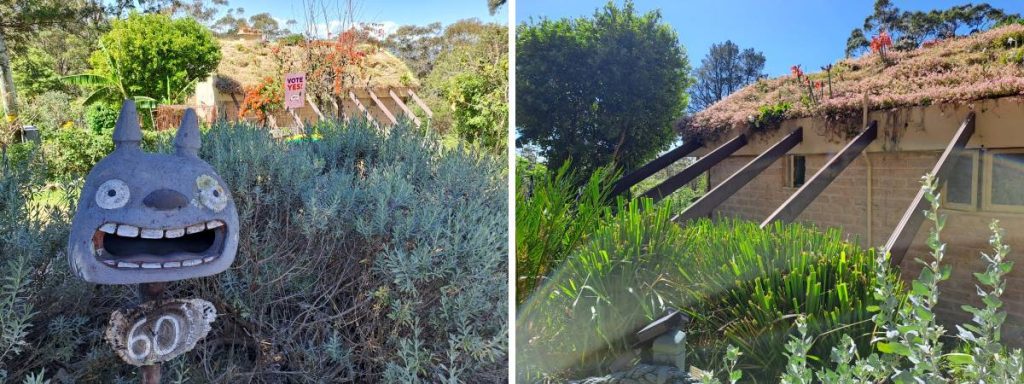
Left: Totoro the ‘nature spirit’ is an intentional symbol of environmentalism that welcomes you to Marilyn and Lewis’ house. Right: Marilyn and Lewis’ green roof house blends in with surrounding vegetation.
This rationale is echoed by eco-architect and artist Friedensreich Hundertwasser who was renowned for his strong advocacy for green or ‘afforested’ roofs. He inspired many small and large scale ‘afforested’ developments around the world.
“It is our duty to put the nature, which we destroy by building the house, back onto the roof. We must give territories back to nature which we have taken from her illegally.” – Friedensreich Hundertwasser
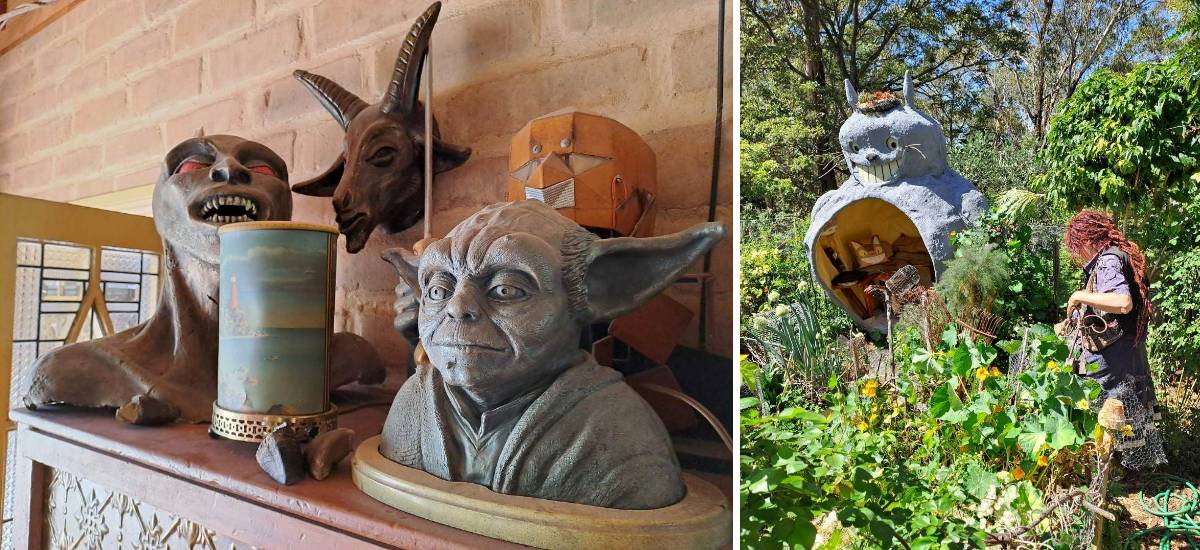
Left: Some curiosities from Marilyn and Lewis’ work in the film industry.Right: Marilyn in her garden with a giant Totoro sculpture/cubby space Lewis created.
Visiting Marilyn and Lewis’ house is, indeed, a bit like visiting a Hundertwasser creation. Flowers bask in the full sun upon their roof, and inside the place is full of artistic quirks and curiosities from their time working in the film industry making sculptures and sets. “The local kids call it the Linden Museum,” Marilyn says. The sweeping curve of their roof is a particular treat for the eye. But aesthetics aside, Marilyn and Lewis’ green roof serves multiple environmental functions.
provide improved insulation, which reduces heating and cooling needs
help with stormwater management by reducing and slowing runoff
absorb noise
produce oxygen and capture carbon
absorb gaseous and particulate pollutants
reduce the urban heat island effect
increase biodiversity
Marilyn cites most of these facts when rationalising her decision to build a green roof, and the payoff has been noticeable. Her roof provides habitat and food for various creatures, including countless insects and the native antechinus. It also keeps the human inhabitants beneath it comfortable all year round. “We don’t have any air conditioning,” Marilyn says. “We have metal shutters for fire protection and to block out heat, and that’s it.”
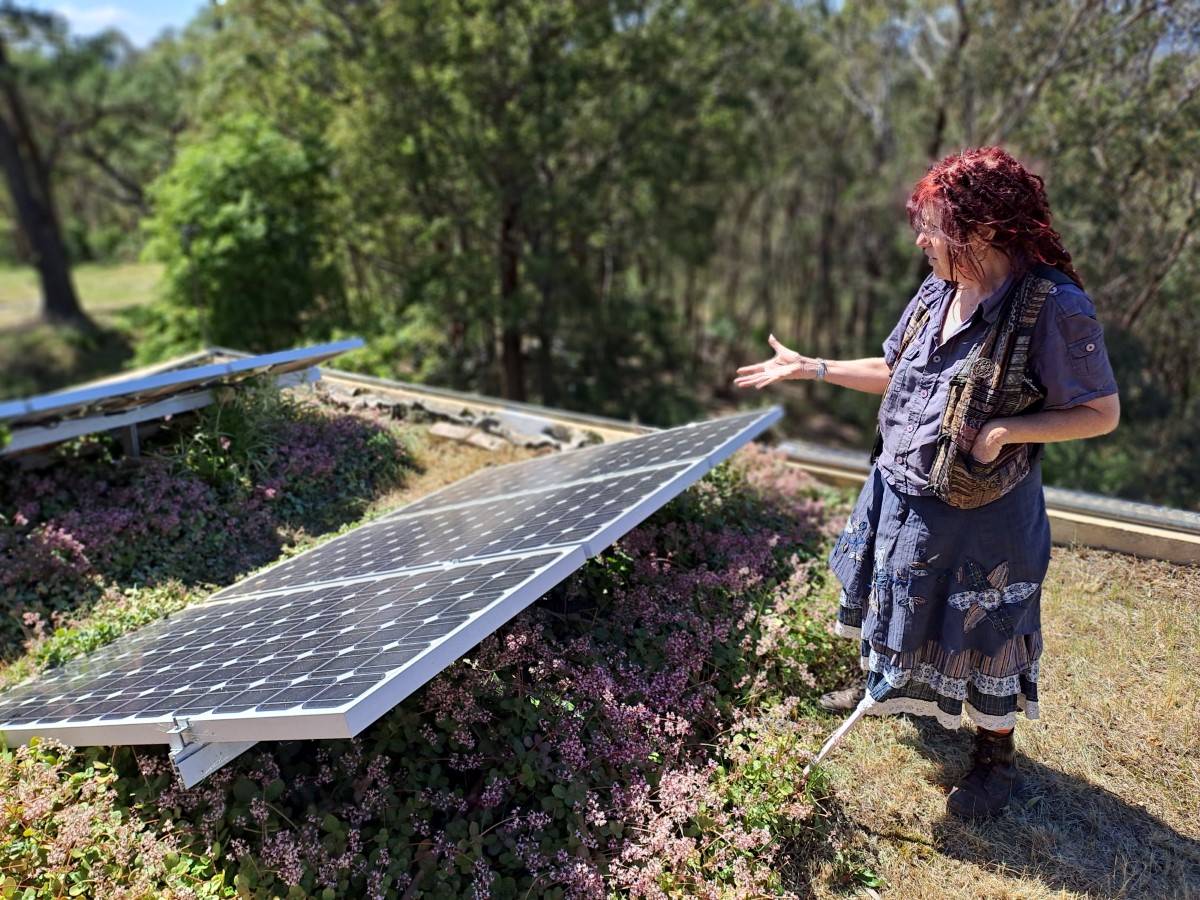
Green roofs can also accommodate solar panels.
A green roof’s capacity to reduce the heat island effect is a significant benefit for individuals and whole communities alike as we face hotter seasons ahead. While the hard surfaces of conventional roofs store and radiate heat, green roofs actually take heat out of the air via evapotranspiration.
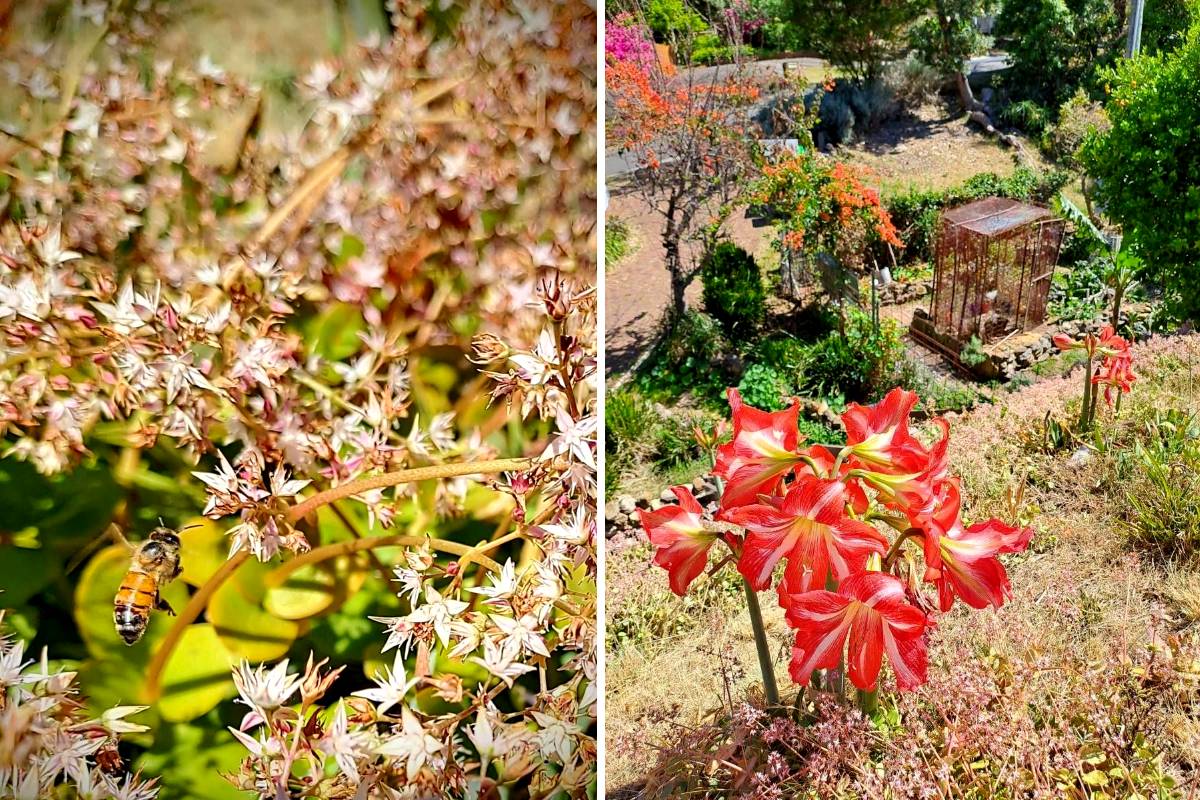
Left: Spot the bee among the rooftop flowers. Right: Flowers basking in the sun on Marilyn and Lewis’ green roof.
Another clear benefit of the roof is that it is resistant to fires. “Green roofs are inherently more fire resistant that conventional roofing,” says architect Nigel Bell of ECOdesign Architects, who has been familiar with Marilyn and Lewis’ home since shortly after its construction. “Earth is solid, always more than 90 mm thick, which is all you need for the most intense fire. Theirs (Marilyn and Lewis’) is 300mm. The low vegetation on top will burn, but it’s not a big deal. The thick earth will protect everything underneath.”
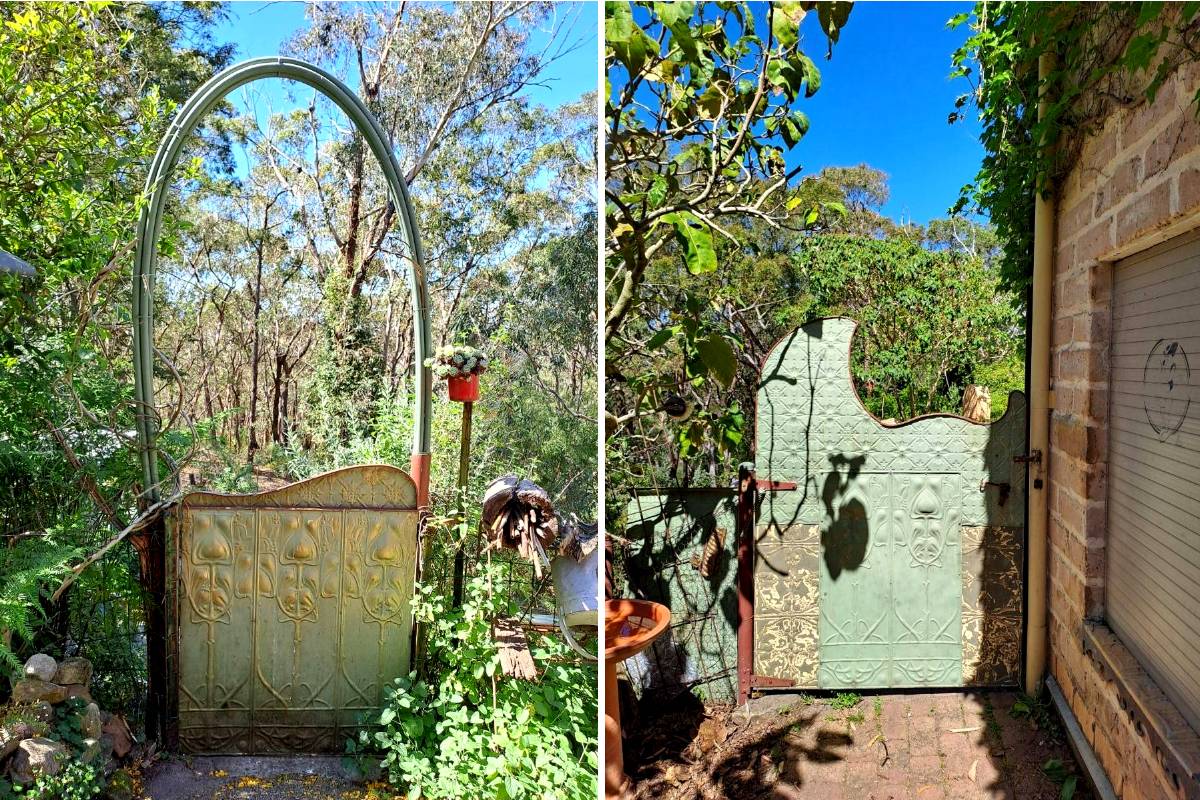
Fire is a consideration Marilyn and Lewis have taken seriously on their property, adopting practical steps to reduce the risk. Aside from opting for a green roof, Lewis replaced all wooden gates on the property with his own custom-made pressed metal gates; they used metal materials in the construction of their deck; they installed a large, metal-walled water tank and petrol-powered pump, which feeds a sprinkler system on the roof; and they installed metal shutters on all external windows.
Lewis created pressed metal panel gates in place of the original wooden ones in order to reduce fire risk.
Despite the clear benefits of having a green roof, they are not a common sight. Nigel suspects one possible imposition is the need for an experienced engineer to do this specialised work. Marilyn also cites getting the weight-bearing right as an important aspect of any green roof build. In the case of their Linden home, using load-bearing mudbricks made the project more feasible.
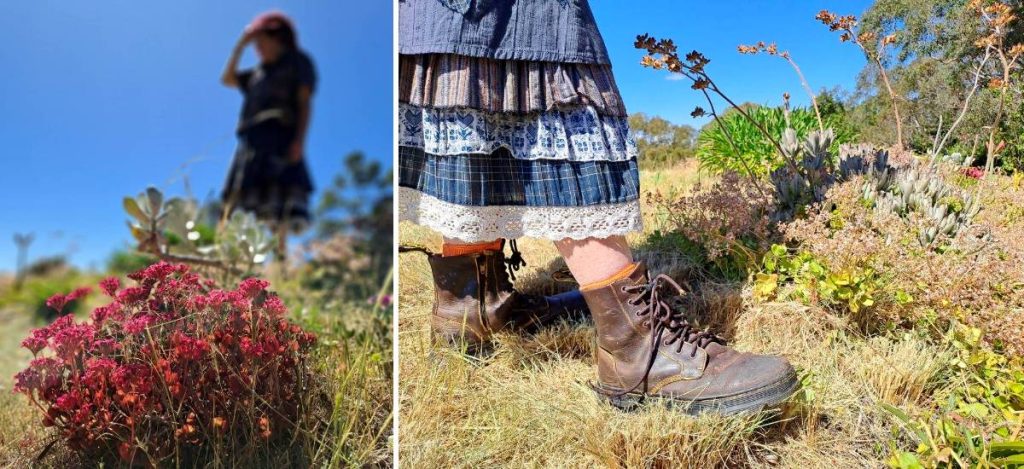
In terms of upkeep, Marilyn occasionally tends to her roof with a whipper-snipper and provides additional watering if there isn’t much rain. She mostly keeps low maintenance succulents up there, which are also a wise choice in the event of fire. The occasional leak has occurred, usually due to wandering grass roots, but these are easily fixed by pulling up the layer of earth where the leak is and replacing the waterproofing sheet underneath.
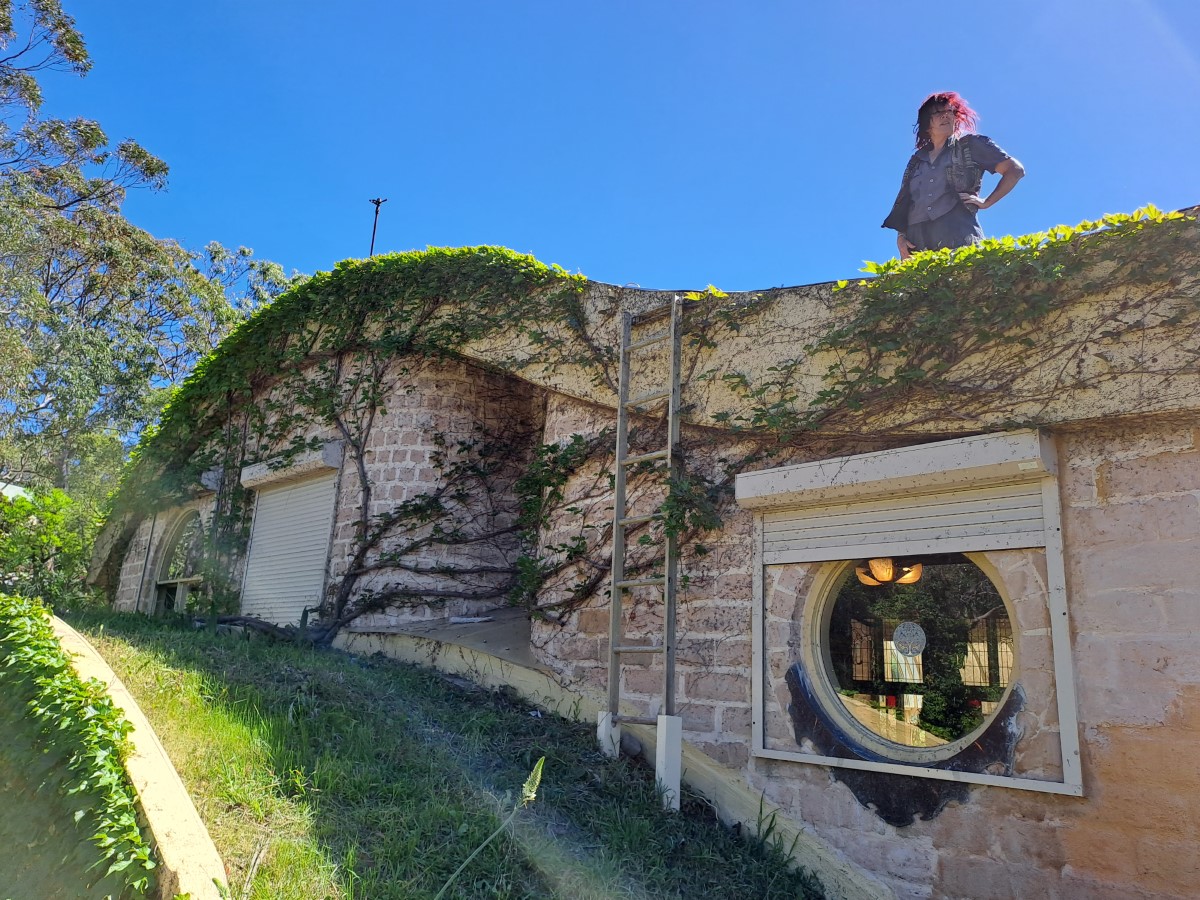
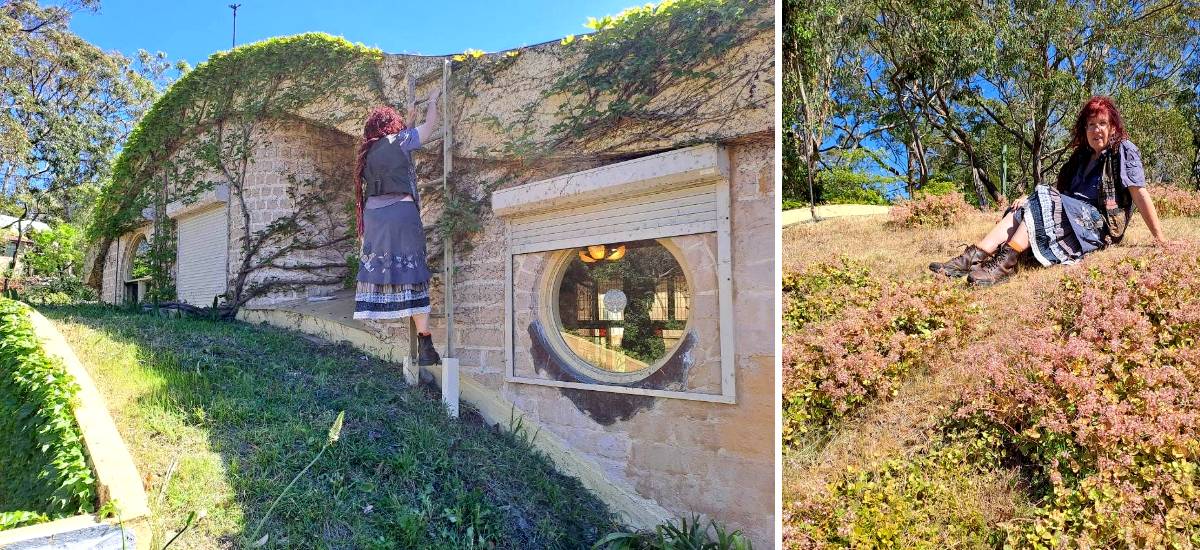
Left: Marilyn climbs up a ladder to the top of her green roof. Right: Marilyn sitting on the hill of her roof.
Perhaps the most underrated perk of a green roof is the delight in sitting on top of it. After our conversation, Marilyn and I step onto the flat roof of her garage where she once grew potatoes and now keeps a healthy crop of spring onions. We then climb a small ladder to the main roof, and I delight in walking to the top of it, just as I might any grassy hill. The insects are busy foraging. The sun is warm. As I sit on the gentle slope I contemplate having a nap among the bees.
There is a special delight in walking on a grassy roof.
This story has been produced as part of a Bioregional Collaboration for Planetary Health and is supported by the Disaster Risk Reduction Fund (DRRF). The DRRF is jointly funded by the Australian and New South Wales governments.
We had a thoroughly enjoyable final Skill Share Saturday for the year yesterday with Qigong, Fashion Upcycling, Seed Saving and Bushcare! We shared seeds from local gardens and harvested carrots, as well as Mizuna, Broad Bean, Daikon and Land Cress seeds from the Planetary Health garden. We then packaged up (and shared) our first Upper Mountains Seed Savers packs for our fledgling Seed Bank. In Bushcare it`s very exciting to see whole new areas of the Planetary Health Precinct open up as we remove invasive weeds. It`s been a year of great progress as we`ve restored habitat for wildlife and given local native plants the opportunity to flourish and re-establish on the site.
Join the Planetary Health Centre this Sat 6 Dec for the last Skill Share Saturday of the year: Qigong at 9am, Seed Saving & Gardening Group at 10am, and Bushcare at 1.30pm. One perfect day with great company, great coffee and food, and great steps for living a healthy balanced life, while also contributing to the health of our planet for present and future generations. All ages welcome!
Registration links in profile and below.
Register for Qigong here: https://bit.ly/48wlHjD Register for Seed Saving & Gardening here: https://bit.ly/4prcRe7 Register for Bushcare here: https://bit.ly/4oAFDrz
We have a rare opportunity to learn about the newest and best possible ways to support family and community members struggling with mental health issues, at a free talk and afternoon tea provided by Upper Blue Mountains Sunrise Rotary at the Planetary Health Centre at 2pm this Saturday 29 Nov. Hear from Peter Joseph AM, Chair of the Black Dog Institute, and Professor Helen Christensen AO, Fellow of the Australian Academy of Science and former Executive Director and Chief Scientist at the Black Dog Institute. They`ll be in conversation with journalist Emma Rossi. Dr Christensen is a pioneer in using the internet to reach young people struggling with depression. Her digital mental health interventions are used by millions globally, delivering evidence-based therapy for depression, anxiety, and suicide prevention. Her research uses data from smartphones and wearables – like movement, screen use, and sleep – to detect early signs of mental health issues. Bookings essential here (link in profile): https://bit.ly/4oOnYxz
This Saturday Sherlie McMillan from Rotarians 4 Planetary Health will be running a workshop on How to use a sewing machine from 9am at the Planetary Health Centre in Katoomba. Learn how to set up a machine, service it, troubleshoot when it`s not sewing correctly, and learn some basic sewing skills.
Bookings essential here (link in profile): https://events.humanitix.com/how-to-use-your-sewing-machine
NB. This class is a prerequisite for our very popular Fashion Upcycling classes held once a month.
We`re thrilled to announce that Professor Helen Christensen, a pioneer in using the internet to reach young people struggling with depression, will be joining the conversation with Peter Joseph AM from the Black Dog Institute and journalist Emma Rossi at the Planetary Health Centre at 2pm this Saturday 29 November. Helen was the Executive Director and Chief Scientist for the Black Dog Institute for 10 years and has now been elected a Fellow of the Australian Academy of Science. Her digital mental health interventions are used by millions globally, delivering evidence-based therapy for depression, anxiety, and suicide prevention. Her research uses data from smartphones and wearables – like movement, screen use, and sleep – to detect early signs of mental health issues. This free event is being co-hosted by Upper Blue Mountains Sunrise Rotary and the Blue Mountains Planetary Health Initiative. Afternoon tea will be provided. Bookings essential here (link in profile): https://bit.ly/4oOnYxz
Human composting is increasingly being legalised around the world. Read about it in Katoomba Area Local News here (link in profile): https://www.katoombalocalnews.com/legalising-human-composting/
If you’d like to see this option available in NSW you can now sign a live petition to the NSW Parliament here (link in profile): https://bit.ly/43QIHbz
Thanks to everyone who contributed to deliver a fantastic Disaster Risk Awareness Expo and Family Day yesterday. @mark_greenhill_mayor opened the event at which we celebrated the 13th birthday of Betty the Asbestos Education House; @firecoat_au demonstrated and launched its range of fire retardant products that can help protect homes, gardens and even electricity poles; the Bushfire Retrofit Toolkit was launched; Santa arrived and delighted young and old; and @plantinspired99 and Action for Animals fed us all with a delicious plant-based sausage sizzle. The day was filled with talks, workshops, stalls and the sharing of a huge amount of expertise to keep us, and the other species we share our planet with, safe and healthy! @southkatoomba.rfb @nswses @fireandrescuensw @nswrfs @redcrossleura @redcrossau @shelter.building.design @firehalo.au @asbestosawareness @amelie_ecology @bbagsbluemtns @wireswildliferescue @handsheartfeet
Our marquee is up and we`re excited about our Expo and Family Day tomorrow (Sat 22 Nov). There`s something for everyone from a free sausage sizzle, plants from Santa and drumming and pollinator workshops, to sessions on keeping you and our community safe from extreme weather events and hazardous substances like mould and asbestos. Learn how intumescent paints can slow the spread of fire and pick up a sample pot; check out all our emergency service organisations; learn how to dispose of hazardous materials; paint a native orchid, make some seed balls or sew a boomerang bag to give as plastic-free Christmas presents this year; enjoy coffee and locally made sweets; and get tips on how to retrofit your home safely and beautifully to be prepared for future extreme weather events. View the full program and register here (link in profile): https://bit.ly/4nFrY1J
There are so many new and innovative ways of doing things, like the new cooking techniques being explored by Michael from Good Fat Pastry, and the new fire protection methods being launched at the Planetary Health Centre`s Expo and Family Day on Sat 22 Nov. Check out Michael’s recent presentation at the Food Security Fair in our video here: https://bit.ly/4pnXbIg (link in profile) and come along to taste his delicious carrot cake and pastries at the Expo on Saturday. Check out the program and register to attend here (link in profile): https://bit.ly/4nFrY1J
In 2006 Peter Joseph’s son Michael suicided after a 14-year episodic battle with mental illness. Peter is now the Chair of the Black Dog Institute which is working to achieve better outcomes for all those struggling with mental health issues. Journalist Emma Rossi will engage Peter in an intimate and moving conversation about a life of purpose and mental health advocacy. As a Rotary scholar Peter will also reflect on how Rotary helped shape his values and sense of purpose as a young man - and how those early lessons continue to guide his work today. This free event is being hosted by the Upper Blue Mountains Sunrise Rotary Club and the Blue Mountains Planetary Health Initiative on Saturday 29 November from 2-4pm at the Planetary Health Centre at 33-39 Acacia St Katoomba. Afternoon tea will be provided. Bookings essential here (link in profile): https://bit.ly/4oOnYxz
Learn about intumescent fire retardant paint and a range of other strategies to prepare for extreme weather events, and to manage hazardous materials, at the upcoming Expo and Family Day at the Planetary Health Centre on Sat 22 Nov. You can register to attend here (link in profile): https://bit.ly/4nFrY1J We checked out how intumescent paint works in this video.
When temperatures reach a certain point the intumescent paint begins to swell and expand, often up to 50 times its original thickness. It forms a thick, carbonaceous "char" that acts as an insulating barrier. This layer slows the rate at which heat reaches the structural elements and buys valuable time for people to safely exit a building during a fire. It makes the structure safer for firefighters and rescue teams. #intumescentpaint #fireretardant #bushfire @firecoat_au...
Mould, lead paint, asbestos, silica dust from engineered stone bench tops and a wide range of chemicals, are amongst some of the many hazardous substances entering our environment and negatively impacting our health. Asbestos is found in over 3000 products including textured paints, moulded garden pots, brake pads and clutch linings in older cars, floor and ceiling tiles, lino, fibro, roofing, pipes and gutters, hot water systems, backing for switchboards and insulation boards in air-conditioning ducts, insulation, sealants, fillers, caulking and adhesives, gaskets for industrial and lab equipment and more. We’ll have information to take away and Blue Mountains City Council and the Asbestos and Hazardous Materials Consultants Association (AHCA) will be running free workshops on how to identify and manage these hazardous substances at the Planetary Health Centre`s Disaster Risk Awareness Expo in Katoomba on Sat 22 Nov. Find out more and register to attend here (link in profile): https://bit.ly/4nFrY1J
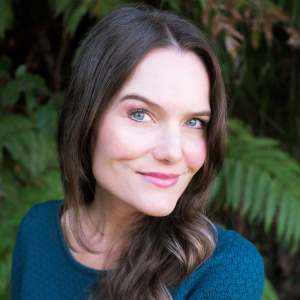
Belle Butler is a writer, musician and occasional photographer. She likes mix-and-matching these artforms and often explores the same themes through each of them. Her short fiction has been published in numerous Australian literary journals and she recently received a WestWords Fellowship and Mentorship with Delia Falconer for her novel manuscript, ‘River.’ Hopefully it will be published one day.
When Dan Gaffney found out he was having a son, it prompted action to break a cycle of inter-generational disconnection. What began as a personal commitment to self-work has since grown into a powerful communal practice helping men become more emotionally literate, accountable, conscious and connected.
Enjoyed this article? Please help spread the word :)
Support the Future of Solutions-Focused Neighbourhood News